
For generations, veterans have carried stories that shaped America. Some were told loudly in newspapers, town halls, and local VFW posts. Others stayed quiet — tucked away behind deployment photos, old uniforms, and memories few outside the military could fully understand. Today, however, the veteran voice is evolving. It is no longer confined to military bases or reunion halls. Veterans are becoming writers, podcasters, entrepreneurs, advocates, creators, community leaders, and commentators helping shape conversations across the country.
That matters now more than ever.
America’s veterans represent one of the most unique and diverse communities in the nation. They come from every state, every economic background, every race, religion, and political belief. They have served in deserts and jungles, aboard ships, in intelligence centers, hospitals, aircraft, and combat zones. Some spent decades in uniform while others served one enlistment and carried those lessons into civilian life. Yet despite those differences, veterans often share a common understanding of sacrifice, discipline, teamwork, and service to something greater than themselves.
That perspective is valuable far beyond the battlefield.
Veterans bring a grounded viewpoint to public discussion because they have lived through real-world consequences. They understand leadership under pressure. They understand what happens when institutions succeed — and when they fail. They understand the cost of division and the importance of unity. In a time when public discourse often feels driven by outrage, algorithms, and short attention spans, veteran voices can provide something increasingly rare: perspective built through experience.
Military service has always held a special place in American history. From the citizen-soldiers of the Revolution to the generations who fought through World War II, Korea, Vietnam, the Global War on Terror, and countless humanitarian missions, veterans have helped define the nation’s identity. But service does not end when the uniform comes off. Veterans continue serving their communities every day as teachers, police officers, firefighters, healthcare workers, tradesmen, business owners, parents, coaches, and mentors.
The modern veteran voice reflects all of those identities.
Importantly, today’s veterans are not a monolith. Their experiences differ greatly depending on branch, era, mission set, rank, gender, and background. A Marine infantryman from Fallujah may see the world differently than an Air Force maintainer, a Navy corpsman, or an Army logistician. A female veteran navigating healthcare challenges may tell a different story than a combat veteran transitioning into corporate America. Those differences are not weaknesses within the veteran community — they are strengths. They create a broader and more honest picture of military life and the realities veterans face after service.
That diversity of thought is exactly why veteran storytelling matters.
When veterans speak openly about mental health, transition struggles, employment barriers, toxic exposures, family life, leadership, fitness, faith, or rebuilding purpose after service, they help others feel less isolated. They also educate the broader public. Too often, civilians only encounter simplified portrayals of veterans through movies, politics, or headlines. Real veteran voices cut through stereotypes. They show humor alongside hardship, resilience alongside vulnerability, and humanity behind the uniform.
At its best, veteran commentary does not seek division. It seeks understanding.
The veteran community also carries an important responsibility: preserving institutional memory. Each generation inherits lessons from those who came before it. Stories from World War II veterans influenced Vietnam-era troops. The lessons of Vietnam shaped leaders during Iraq and Afghanistan. Today’s younger veterans will one day guide the generations behind them. If those stories disappear, so do the hard-earned lessons attached to them.
That is why platforms dedicated to authentic veteran storytelling are so important.
Bulletproof Veteran was built around the idea that veterans still have missions after service. Through conversations, content, advocacy, and community engagement, the platform aims to highlight the experiences, challenges, successes, and perspectives of the veteran community. It is not about speaking for every veteran. It is about creating space for veterans to speak for themselves.
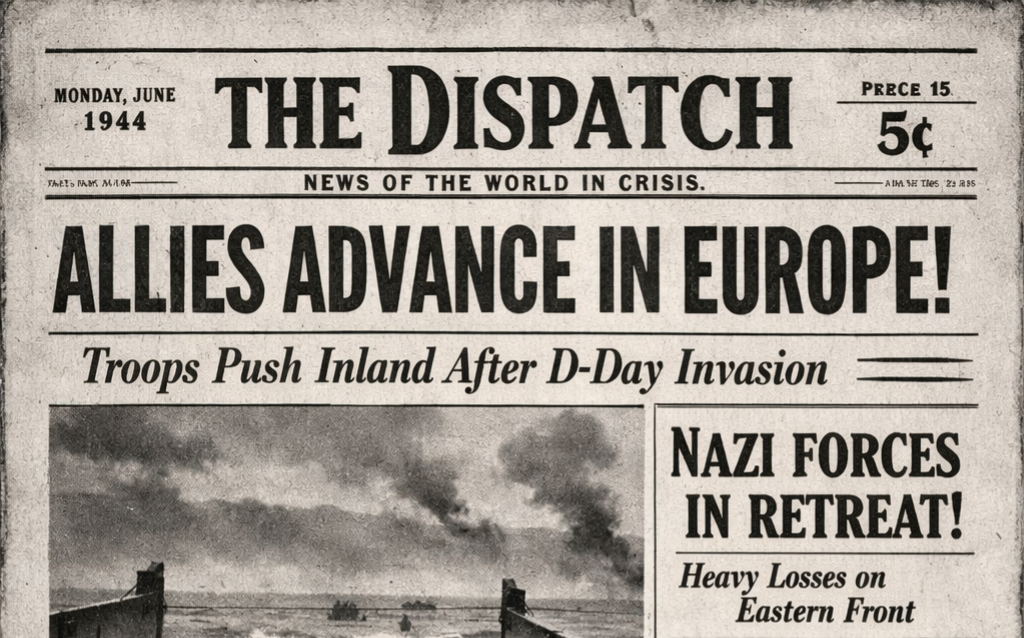
That mission continues with The Dispatch — a modern platform inspired by the spirit of the old wartime newspapers that once connected troops and communities during moments of uncertainty and change. But instead of carrying headlines from overseas fronts, The Dispatch focuses on the issues shaping the modern veteran experience: health, readiness, employment, education, leadership, culture, policy, transition, and the stories that often go untold.
Most importantly, The Dispatch exists to amplify voices.
The veteran community has thinkers, creators, innovators, and leaders whose experiences deserve attention far beyond social media soundbites. Their stories matter not only to other veterans, but to the country they served. By creating a place where those stories can be shared honestly and openly, The Dispatch hopes to continue a long American tradition: veterans contributing not just through service in uniform, but through service in conversation, leadership, and community long after the mission changes.
One story at a time, the modern veteran voice continues to grow stronger.