Leaving the military is not just a career change. For many veterans, it is the loss of a mission, a team, a rhythm, and an identity. The uniform comes off, but the need to serve rarely disappears.
Research backs up what many veterans already know. A systematic review of veteran reintegration found that transition is often shaped by “multiple losses,” including loss of military culture, community, identity, and purpose. A 2025 study on military identity loss also found that discharge can create losses in a veteran’s sense of self, increasing mental health risk.
That loss matters. A study of 4,069 U.S. veterans found that high purpose in life was linked with 42% to 94% lower odds of depression, anxiety, PTSD, substance-use disorders, suicidal ideation, suicide attempts, and future suicide intent. Another long-term study found that lower purpose in life explained much of the risk for new suicidal ideation among veterans with PTSD or major depression.
The dark path usually does not begin with one dramatic moment. It often starts quietly: isolation, drinking more, sleeping less, avoiding people, feeling useless, missing the team, and believing the best version of yourself was left behind at your last duty station. VA’s 2025 suicide report found that 6,398 veterans died by suicide in 2023, and suicide remains a leading concern across the veteran community. Newly separated veterans remain a high-risk group; VA reported that those who separated in 2022 had a 12-month suicide rate of 41.2 per 100,000.
But the answer is not simply “get a job.” Employment matters, but mission is deeper than a paycheck. Veterans need something that connects their skills to a purpose larger than themselves.
Some have found that next mission through disaster response. Team Rubicon, founded after the 2010 Haiti earthquake, uses veterans’ leadership, discipline, and crisis-response skills to serve communities before, during, and after disasters. The organization reports more than 200,000 volunteers and over 1,200 operations.
Others find purpose through community service. The Mission Continues was built around the idea that veterans can keep serving at home, especially in under-resourced communities. Its own program data reported that 80% of veteran participants felt a stronger sense of purpose, and 84% felt they could make a difference in their community.
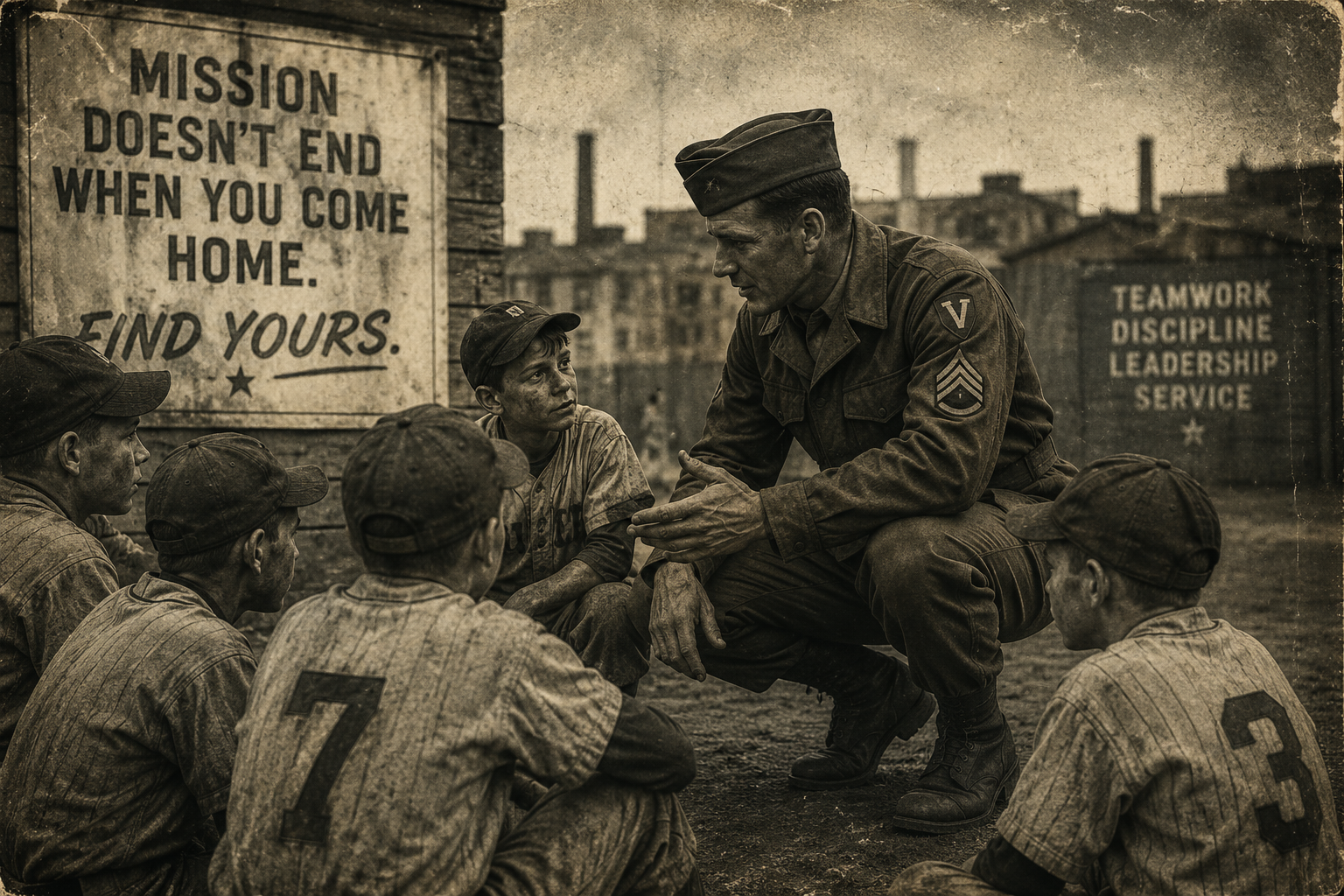
That is the pattern: the mission changes, but the call to serve remains. Some veterans become firefighters, police officers, teachers, coaches, nurses, entrepreneurs, peer mentors, advocates, or nonprofit leaders. Others start veteran hockey programs, lead ruck clubs, volunteer at food banks, mentor young people, help fellow veterans file benefits claims, or build platforms that give veterans a voice.
The next mission does not have to be perfect. It just has to begin.
For the veteran sitting in that quiet space after separation, wondering what comes next, the answer is not to become who you were before the military. The answer is to take what the military built in you — discipline, courage, loyalty, experience, endurance, and service — and point it somewhere new.
The country still needs veterans. Communities still need leaders. Families still need examples. Younger generations still need mentors. Other veterans still need someone who understands.
The mission is not over.
It is waiting to be reassigned.