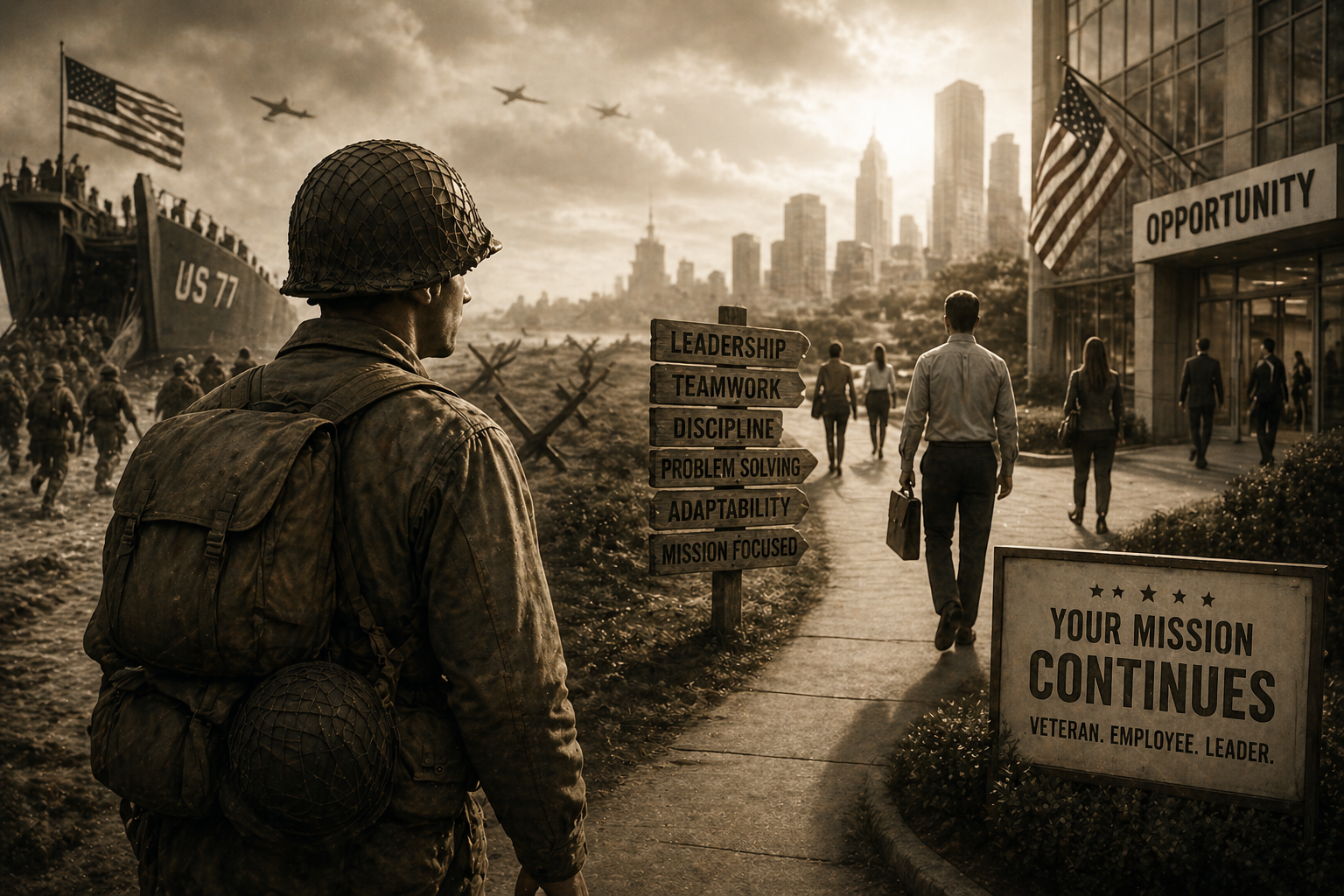
For many veterans, leaving the military is more than a career change—it is a full identity shift. One day they are part of a mission-driven team with a clear purpose, structure, and responsibilities. The next, they are expected to navigate a civilian job market that often speaks a completely different language. While many veterans thrive after service, others face real barriers to employment that can delay or derail their transition.
The good news is this: veterans bring tremendous value to the workforce. The challenge is not a lack of talent—it is often a gap in translation, understanding, and access.
Barriers to Entry for Veterans Seeking Employment
Translating Military Experience into Civilian Terms
One of the biggest obstacles veterans face is explaining what they did in the military in a way civilian employers understand. A logistics specialist may have managed millions of dollars in equipment and coordinated global supply chains, but if their resume only lists a military occupational code, employers may miss the relevance entirely.
Military experience is often highly advanced, but without the right wording, it can be overlooked. That is why resume translation and career coaching are so important. The U.S. Department of Labor and VA both provide tools to help veterans convert military skills into civilian job language.
Lack of Professional Network
Many civilian jobs are found through relationships, referrals, and networking. Veterans leaving active duty may not yet have connections in private industry. Unlike someone who spent years building contacts in a specific field, transitioning veterans are often starting fresh. This can make equally qualified candidates feel invisible in the hiring process.
Misconceptions About Veterans
Some employers still hold outdated assumptions about veterans. They may incorrectly believe veterans only fit law enforcement or security roles, struggle to adapt, or cannot function outside rigid structures. These stereotypes ignore the reality that veterans serve in fields like healthcare, cybersecurity, engineering, administration, intelligence, aviation, human resources, and technology.
Credentialing and Licensing Gaps
Many veterans gain high-level technical skills during service, but some civilian industries require licenses or certifications that do not automatically recognize military training. A veteran medic, mechanic, or IT specialist may still need additional credentials to work in the civilian sector.
Invisible Challenges During Transition
Some veterans face service-connected disabilities, mental health challenges, or the stress of reintegration. These factors do not define their capabilities, but they can complicate job searches without the right support system. Programs through VA and workforce agencies can help veterans with accommodations, counseling, and career planning.
The Unique Skills Veterans Bring to Employers
Veterans are not “charity hires.” They are high-value professionals with proven experience in demanding environments.
Leadership Under Pressure
Veterans are trained to lead teams, make decisions quickly, and stay calm under stress. Many have managed people, equipment, and missions in high-stakes situations.
Accountability and Discipline
Showing up on time, meeting standards, and completing the mission are deeply ingrained habits in military culture. Employers value workers who can be trusted to perform consistently.
Adaptability
Military life requires constant change—new missions, new locations, new leadership, new technology. Veterans know how to adapt, learn quickly, and perform in unfamiliar environments.
Teamwork
Veterans understand how individual roles contribute to larger organizational success. They know how to collaborate, communicate, and support team objectives.
Problem Solving
Service members are trained to assess situations, solve problems with limited resources, and execute under pressure. Those abilities transfer directly into business environments.
Integrity and Mission Focus
Veterans often bring a strong sense of responsibility, ethics, and purpose. They understand commitment to something bigger than themselves.
How Veterans Can Showcase Their Value to Employers
Translate the Resume
Replace military jargon with clear business language. Focus on outcomes:
- Managed teams of 20+ personnel
- Oversaw $5 million in assets
- Improved operational efficiency
- Led training programs
- Coordinated logistics across multiple locations
Use numbers and results whenever possible.
Build a Professional Brand
Create or update a LinkedIn profile. Highlight leadership, certifications, education, and measurable accomplishments. Connect with veteran-friendly employers and recruiters.
Practice the Interview Story
Employers want examples. Veterans should prepare stories that demonstrate leadership, conflict resolution, teamwork, innovation, and resilience.
Pursue Certifications
Short-term credentials in project management, IT, trades, healthcare, or data analytics can strengthen a resume and bridge any licensing gaps.
Use Veteran Preference and Hiring Programs
Many federal, state, and private employers actively recruit veterans. Some organizations also receive incentives for hiring qualified veterans.
Employment Resources for Veterans
Government Resources
- VA Careers & Employment: Career support, training, and transition resources.
- U.S. Department of Labor VETS: Employment rights, job tools, and transition assistance.
- American Job Centers: Local career centers offering resume help, training, and job placement support.
- USAJOBS: Federal jobs and veterans preference opportunities.
Nonprofit and Community Resources
- Wounded Warrior Project – Warriors to Work: Career counseling and employment support.
- Swords to Plowshares: Employment and training support for veterans.
- Veteran mentorship and networking groups: Local chambers, LinkedIn groups, and veteran business organizations can create valuable connections.
Final Thoughts
Veteran unemployment is rarely about ability. More often, it is about communication, connection, and opportunity. Veterans have already proven they can lead, solve problems, adapt, and perform under pressure. Those are exactly the qualities strong employers need.
When veterans learn to translate their experience—and when employers learn to recognize it—the result is powerful: stronger companies, stronger communities, and a stronger workforce.