
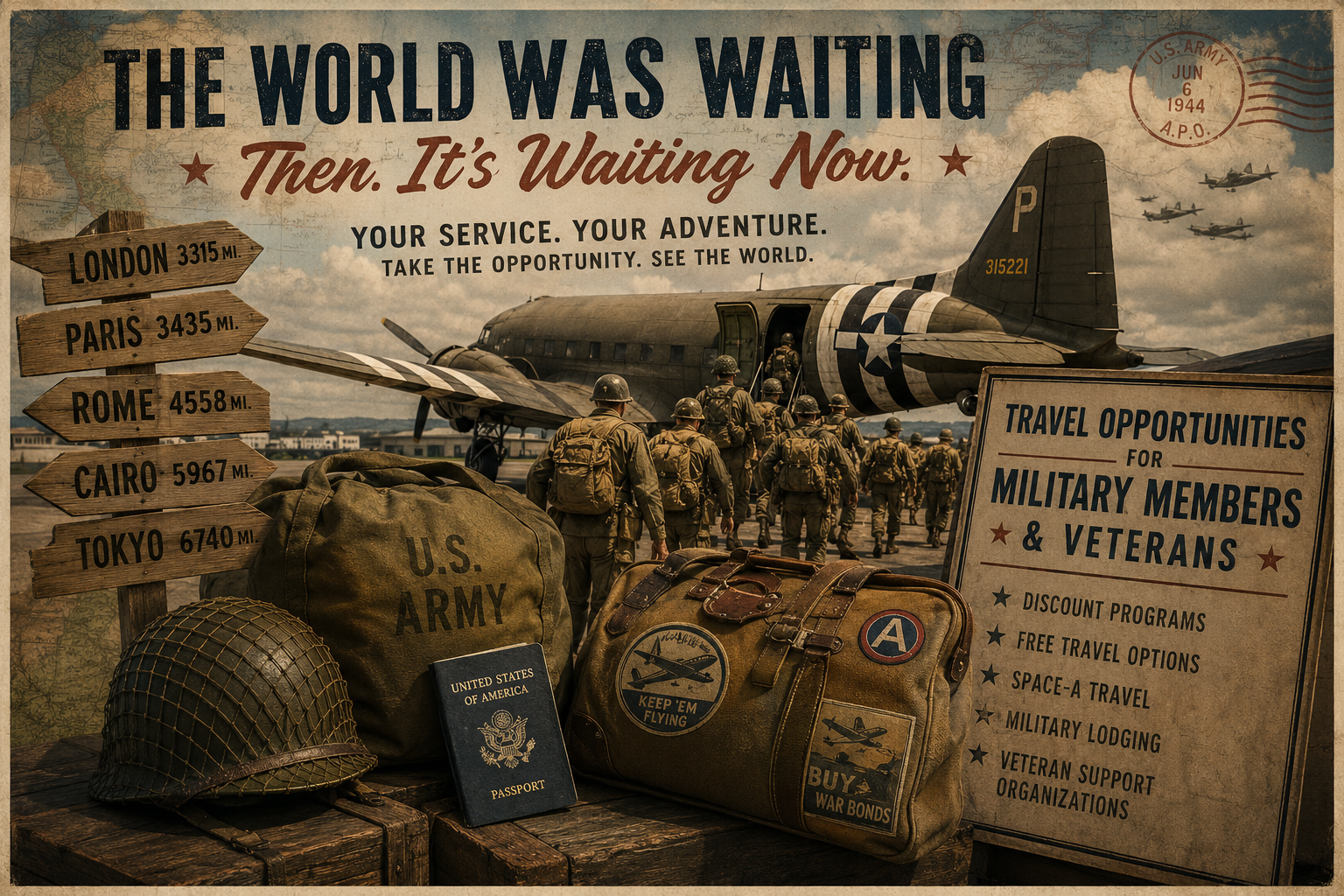
One of the greatest benefits of military service is something that often goes unnoticed: the opportunity to experience the world.
Whether serving overseas, stationed across the country, or simply taking leave to explore somewhere new, military life offers countless opportunities to discover different cultures, landscapes, and people. Yet many service members spend weekends confined to the barracks or dormitories—a tradition so common that military culture even has a name for it: the "dorm rat."
Every experienced noncommissioned officer has probably encouraged a young Soldier, Sailor, Airman, Marine, Guardian, or Coast Guardsman to get off base and experience the places they are stationed. The advice isn't simply about sightseeing. It is about personal growth.
Travel teaches independence, adaptability, cultural awareness, communication, and confidence—qualities that translate directly into military leadership and later into civilian life.
For veterans, travel can become something even more meaningful.
Research consistently shows that travel can reduce stress, improve mental health, decrease burnout, increase physical activity, and strengthen relationships. For many veterans transitioning from military service, travel provides something often difficult to find after leaving active duty: a renewed sense of purpose and adventure.
Fortunately, the military community enjoys some of the best travel benefits available anywhere. From discounted airfare and military resorts to Space-Available flights around the world, veterans and service members have access to opportunities that most Americans never realize exist.
This guide explores those opportunities in depth.
Understanding Travel Benefits by Eligibility
Not every benefit applies to everyone. Travel programs often depend on military status.
Active Duty Service Members
Active duty members generally have access to the widest range of benefits, including Space-Available flights, military lodging, MWR resorts, American Forces Travel, discounted attraction tickets, Armed Forces Recreation Centers, military campgrounds, temporary lodging, recreation rentals, installation travel offices, and overseas recreation programs.
National Guard & Reserve
Eligibility varies by activation and retirement status, but many Guard and Reserve members can use American Forces Travel, ITT programs, certain Space-A categories, military lodging when authorized, and MWR recreation opportunities.
Military Retirees
Retirees retain access to many valuable travel benefits, including Space-A travel, military lodging, MWR resorts, American Forces Travel, installation campgrounds, recreation rentals, and Armed Forces Recreation Centers.
Veterans & Disabled Veterans
Honorably discharged veterans and veterans with qualifying service-connected disabilities may have access to American Forces Travel, public-land benefits, private military discounts, selected MWR privileges, installation access, adaptive recreation, and certain Space-A opportunities depending on status and current policy.
Active Duty Service Members
Active duty members generally have access to the widest range of benefits, including Space-Available (Space-A) flights worldwide, military lodging, MWR resorts, American Forces Travel, discounted attraction tickets, Armed Forces Recreation Centers, military campgrounds, temporary lodging facilities, discounted rental equipment, installation travel offices, and overseas military recreation programs.
National Guard and Reserve
Guard and Reserve eligibility varies depending on activation status and retirement status.
Many programs include American Forces Travel, Information, Tickets & Travel (ITT), certain Space-A categories, military lodging during authorized use, and MWR recreational opportunities.
Military Retirees
Retirees continue to receive many of the best travel benefits.
These include worldwide Space-A travel, military lodging, MWR resorts, American Forces Travel, discounted cruises, installation campgrounds, recreation rentals, and Armed Forces Recreation Centers.
Retirees often become some of the most frequent users of military travel programs because of their schedule flexibility.
Honorably Discharged Veterans
Travel opportunities for veterans have expanded significantly over the past decade.
Many honorably discharged veterans now qualify for American Forces Travel, national park discounts, numerous private military discounts, veteran organization travel programs, and select installation privileges where authorized.
Eligibility varies depending upon individual programs and local installation policies.
Disabled Veterans
Veterans with service-connected disabilities often qualify for additional travel opportunities depending upon disability rating.
Possible benefits include expanded installation access, commissary and exchange privileges, American Forces Travel, some MWR privileges, Space-A travel eligibility for qualifying veterans under current Department of Defense rules, adaptive recreation organizations, and specialized outdoor programs.
American Forces Travel: One of the Best Benefits You Probably Aren't Using
One of the biggest changes in recent years has been the expansion of American Forces Travel.
The website functions similarly to commercial travel-booking websites but is operated for eligible members of the military community.
Eligible users can book flights, hotels, rental cars, cruises, vacation packages, theme park tickets, sporting event tickets, and concerts.
The program frequently offers lower booking fees, exclusive hotel pricing, military-only cruise discounts, and reduced rental car rates.
Unlike many generic "military discount" websites, purchases through American Forces Travel also support Morale, Welfare, and Recreation programs that fund quality-of-life activities across the Department of Defense. Honorably discharged veterans may be eligible after completing the site's identity-verification process.
Military Recreation Lodging
Many military families never realize just how extensive the military lodging system is.
Across the United States—and overseas—installations and military recreation systems operate beach resorts, mountain cabins, ski lodges, RV parks, campgrounds, cottages, lakeside cabins, and marina lodging.
Well-known examples include the Hale Koa Hotel in Hawaii, Shades of Green at Walt Disney World, Edelweiss Lodge and Resort in Germany, and Seward Military Resort in Alaska.
Many of these facilities can cost significantly less than comparable civilian resorts while providing excellent amenities and easy access to popular destinations.
Reservations are usually based upon eligibility and priority, and popular destinations may fill quickly during peak travel seasons. Travelers should plan months in advance when possible.
Information, Tickets, and Travel (ITT)
Major military installations commonly operate Information, Tickets, and Travel offices.
These offices can provide discounted Disney tickets, Universal Studios tickets, national park information, local attraction discounts, sporting event tickets, cruise planning, vacation consultation, and hotel discounts.
Many military travelers overlook ITT offices, but a quick stop before a major family vacation can sometimes save hundreds of dollars.
Space-Available (Space-A) Travel
Few military benefits generate more excitement—or more confusion—than Space-Available travel.
It is one of the greatest travel opportunities available to eligible military travelers.
It can also become one of the most frustrating if you do not understand how it works.
What Is Space-A?
Military aircraft frequently fly with unused passenger seats. Rather than allowing those seats to remain empty, eligible travelers may occupy them after all mission-essential passengers have boarded. This is known as Space-Available travel.
Flights may occur aboard aircraft such as the C-17 Globemaster III, C-5 Galaxy, KC-46 Pegasus, KC-135 Stratotanker, and other military aircraft configured or approved for passenger movement.
Some flights resemble commercial airline experiences. Others involve cargo aircraft where passengers may sit in web seating alongside pallets and military equipment.
Both are part of the adventure.
Who Can Use Space-A?
Eligibility is determined by Department of Defense rules, travel status, destination, and Space-A categories.
Common eligible groups include active duty members on authorized leave, military retirees, eligible dependents, certain National Guard and Reserve members, certain surviving family members, and qualifying veterans with permanent service-connected total disabilities for authorized travel under current policy.
Eligibility categories determine boarding priority, and higher-priority travelers are boarded first. A traveler should confirm his or her current category and destination eligibility with the applicable passenger terminal before relying on Space-A for a trip.
How Do You Use Space-A?
The process is straightforward, but it requires flexibility.
Step 1: Find a Passenger Terminal
Locate an Air Mobility Command or other participating military passenger terminal. Many large Air Force installations operate passenger terminals, and military air terminals may publish local instructions for Space-A travelers.
Step 2: Register
Travelers submit a Space-A request, often electronically or in person depending on terminal procedures and traveler status.
Your registration establishes your place within your eligibility category, subject to the applicable rules.
Step 3: Monitor Flights
Passenger terminals may publish tentative flight schedules, often within a short planning window. Some maintain official social-media pages or terminal information pages with updates.
These schedules can change quickly because military missions come first.
Step 4: Roll Call
Passengers report to the terminal for roll call.
Seats are assigned according to eligibility category, sign-up or registration priority, and available seating under the rules being used by that terminal.
Step 5: Fly
If selected, you're on your way.
If not, you wait for another opportunity or activate your backup plan.
The Biggest Risks of Space-A
Space-A is not commercial travel.
The aircraft's mission—not your vacation—comes first.
Flights Can Be Cancelled
Missions change. Aircraft are reassigned. Operational requirements take priority. A flight you expected to take may disappear entirely.
Delays Can Be Significant
Aircraft maintenance, weather, crew availability, mission changes, or operational priorities can turn hours of delay into days.
You Can Be Bumped
Higher-priority travelers or mission requirements can consume available seats. Even when a flight appears promising, a Space-A seat is never the same thing as holding a confirmed commercial airline reservation.
There May Be No Return Flight
This is perhaps the biggest risk.
Experienced Space-A travelers commonly maintain emergency funds and a commercial backup plan in case no suitable return flight becomes available.
Build Flexibility
Do not schedule a Space-A return the night before you must report to work. Build extra days into the trip whenever possible.
Carry Backup Money
Budget enough to purchase lodging, ground transportation, meals, and a commercial ticket if the military flight plan falls apart.
Watch the Terminal
Monitor official passenger-terminal information and remain ready for schedule changes, roll calls, and alternate destinations.
Enjoy the Adventure
The people who enjoy Space-A most tend to view the uncertainty and military-aircraft experience as part of the trip rather than an inconvenience.
Tips for Successful Space-A Travel
Experienced travelers recommend traveling with flexible dates, carrying only what you can easily manage, bringing snacks and water when permitted, keeping emergency funds available, building extra vacation days into the schedule, monitoring passenger-terminal updates, researching alternate airports, and understanding your boarding category before arriving.
The travelers who enjoy Space-A the most generally view the journey itself as part of the adventure.
Military Campgrounds and RV Parks
Military installations operate a large network of RV parks and campgrounds.
Facilities may include full hookups, waterfront sites, hiking trails, fishing access, golf, marina access, cabins, laundry facilities, and recreation rentals.
Nightly costs are often competitive with or below commercial RV resorts, making military campgrounds particularly valuable for retirees and veteran travelers taking extended road trips.
Some retirees travel the country extensively while using military campgrounds as their primary lodging network.
National Parks and Public Lands
Military families and veterans should not overlook America's public lands.
Available programs can include America the Beautiful passes, military-related entrance benefits, lifetime access opportunities for eligible disabled veterans, discounted camping at certain locations, historic sites, and national monuments.
For families who enjoy hiking, fishing, photography, camping, history, and road trips, these benefits can dramatically reduce vacation costs while opening access to some of the most beautiful places in the country.
Veteran Travel Organizations
Not every trip needs to be planned alone.
Several organizations and veteran communities exist specifically to help veterans travel, reconnect, challenge themselves, and experience new adventures.
LiboRisk
LiboRisk has built a reputation around adventure travel and meaningful experiences that bring members of the military and veteran community together. Its travel concept reflects an idea familiar to generations of service members: liberty is an opportunity to get outside the gate, take a calculated risk, experience somewhere new, and return with a story.
Trips built around adventure and camaraderie can give veterans something beyond a conventional vacation. They can recreate some of the shared experience, humor, challenge, and connection that many veterans miss after leaving military service.
Warrior Expeditions
Warrior Expeditions provides long-distance outdoor experiences for veterans, including opportunities connected with major hiking trails, cycling routes, and paddling expeditions.
Programs built around long-distance movement can offer challenge, solitude, camaraderie, and a defined mission—elements that can be especially meaningful during transition from military life.
Team River Runner
Team River Runner uses kayaking and paddlesports to build community and provide adaptive recreation opportunities for veterans and military families.
Project Healing Waters
Project Healing Waters provides fly-fishing and related programs for disabled veterans and disabled active military service personnel, combining outdoor recreation, skill-building, and community.
Move United
Move United and its network provide adaptive sports and recreation opportunities that can include skiing, cycling, climbing, water sports, and other outdoor activities.
One More Wave
One More Wave helps veterans access surfing through adaptive equipment, community, and ocean-based recreation.
Warrior Surf Foundation
Warrior Surf Foundation provides surf-based programs, wellness activities, and community experiences designed to support veterans and their families.
Organizations such as these demonstrate an important point: veteran travel does not always mean buying a plane ticket and staying at a resort. Sometimes travel means getting in a vehicle with other veterans, heading toward a trailhead, river, mountain, or beach, and rediscovering the feeling of having a mission.
Military Discounts Beyond Transportation
Veterans can also save money throughout a trip.
Many companies and attractions provide military or veteran discounts on hotels, rental cars, museums, zoos, aquariums, sporting events, restaurants, outdoor outfitters, and retail purchases.
Always ask. Many discounts are never prominently advertised.
Planning the Ultimate Budget Veteran Vacation
Imagine a retired Army staff sergeant who wants to spend ten days exploring the Pacific Northwest.
A possible itinerary might look like this:
Day 1: Use Military Travel Pricing
Book a discounted rental car through American Forces Travel and stay overnight at military lodging near Joint Base Lewis-McChord if eligible lodging is available.
Day 2: Mount Rainier
Visit Mount Rainier National Park using a qualifying military, veteran, or access pass. Pack food instead of relying on expensive tourist-area dining and use the rental car to explore several areas of the park.
Days 3–4: Olympic National Park
Travel to Olympic National Park. Use camping or other inexpensive lodging where practical and spend the days hiking, visiting the coastline, photographing the park, and exploring the Olympic Peninsula.
Days 5–6: Puget Sound and Seattle
Use eligible military recreational lodging or other discounted lodging near Puget Sound. Explore Seattle and check ITT offices, participating museums, attractions, and local businesses for military or veteran admission discounts.
Days 7–8: San Juan Islands and Veteran Recreation
Take a ferry through the San Juan Islands and look for veteran-organized outdoor excursions, military recreation rentals, paddling opportunities, fishing, or other low-cost outdoor activities.
Days 9–10: Space-A or the Backup Plan
If timing, eligibility, routing, and seat availability align, attempt the return journey through an appropriate Space-A opportunity from a participating military passenger terminal.
If no seats become available, use the commercial return option that was budgeted as the contingency plan.
Estimated Savings
Compared with a standard civilian vacation, combining military lodging, public-land benefits, discounted travel bookings, attraction discounts, camping, recreation programs, and a successful Space-A leg could save hundreds—or potentially thousands—of dollars depending on destination, season, family size, and availability.
Final Thoughts
Military service often demands sacrifice, long hours, deployments, and time away from family. Yet it also opens doors to opportunities that many Americans never receive. Travel is one of those opportunities.
For young service members, getting off base and exploring new places builds confidence, broadens perspectives, and creates memories that often outlast the duty station itself. For veterans, travel can become an important part of life after service—a way to reconnect with family, rediscover adventure, and replace some of the structure of military life with meaningful new experiences.
Whether it is a weekend at a military beach cottage, a cross-country road trip using discounted lodging, a surf retreat with fellow veterans, or the unforgettable experience of flying aboard a military cargo aircraft on a Space-A mission, these benefits exist because of your service.
The key is simply knowing they are there—and making the decision to step beyond the gate.
Sources and Further Reading
- Military OneSource: American Forces Travel
- Military OneSource: Space-Available Travel
- Military OneSource: Travel and Lodging
- Military OneSource: Information, Tickets & Travel
- Armed Forces Vacation Club
- Warrior Expeditions
- Team River Runner
- Project Healing Waters Fly Fishing
- Move United
- One More Wave
- Warrior Surf Foundation