
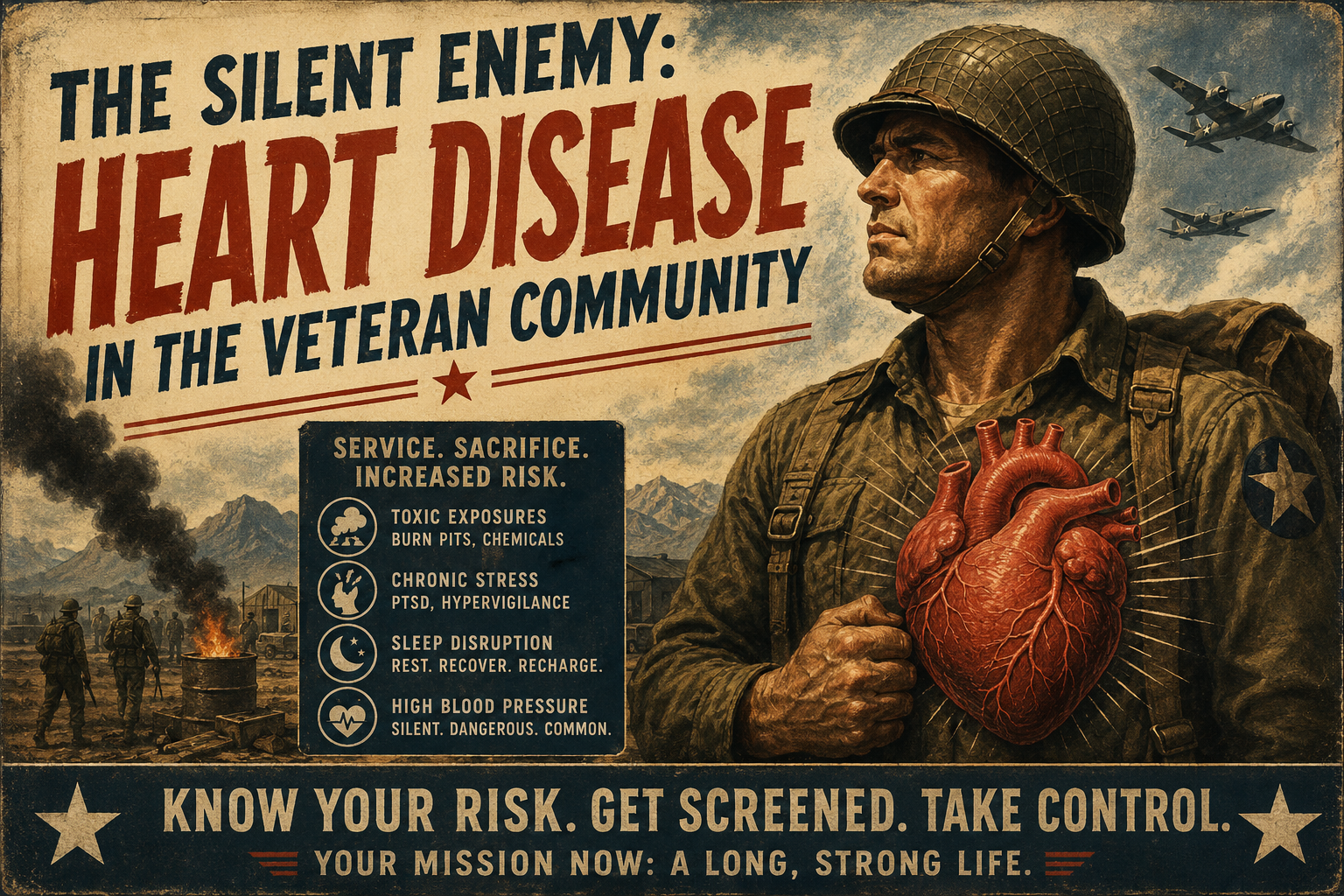
Heart disease is often described as a silent killer because it can build for years before the first crisis. For veterans, that silence is especially dangerous. Military service can stack risk factors on top of one another: chronic stress, irregular sleep, tobacco exposure, blast and injury history, toxic environments, high operational tempo, and the loss of structured fitness after separation.
The result is not a simple story of individual choices. It is a service-connected health picture in the broadest sense: years of mission demands, environmental exposures, trauma, and culture shaping the body long after the uniform comes off. Veterans are not doomed to heart disease, but they do need to understand their risk earlier, document their history clearly, and push for screening before symptoms become emergencies.
The Veteran Heart Disease Picture
The Department of Veterans Affairs identifies high blood pressure, smoking, high cholesterol, obesity, lack of physical activity, and uncontrolled diabetes as major cardiovascular disease risk factors. Those same risk factors exist in the civilian world, but they often appear in veterans alongside combat stress, post-traumatic stress symptoms, sleep apnea, chronic pain, and medication burdens that can make prevention more difficult.
VA research has also made clear that cardiovascular disease is not just an older male veteran issue. Research focused on women veterans has found that women veterans have unique cardiovascular risk factors and may be less likely than men veterans to receive preventive care such as statin therapy. That matters because the veteran population is changing, and prevention efforts have to reflect the full force—not just the image many people still have of an older male veteran.
For post-9/11 veterans, a major concern is that cardiovascular risk may begin earlier than expected. A large 2024 study of more than 459,000 veterans found that longer deployment to bases with burn pits was associated with increased odds of hypertension and ischemic stroke. The study does not prove that every exposed veteran will develop heart disease, but it strengthens the case that environmental exposure belongs in the heart-health conversation.
What the Studies Are Showing
The strongest research picture is not one single cause. It is a pattern. Veterans with post-traumatic stress disorder, sleep problems, toxic exposure histories, metabolic risk factors, and deployment-related stressors show higher cardiovascular concern across multiple lines of research.
Studies on PTSD and cardiovascular health have found that PTSD is associated with higher risk of coronary heart disease and related mortality. The suspected pathways include chronic activation of the stress response, inflammation, unhealthy coping behaviors, sleep disruption, and changes in blood pressure and metabolism. In plain language: a nervous system that stays on high alert can keep hitting the cardiovascular system long after the danger has passed.
Sleep is another major battlefield. Veterans with PTSD symptoms often screen at high risk for obstructive sleep apnea, and sleep apnea is strongly tied to hypertension, arrhythmias, stroke, and heart failure. When insomnia and sleep apnea overlap, the cardiovascular risk picture can worsen. Many veterans normalize poor sleep because it was part of military life, but the heart does not see it as toughness. It sees it as strain.
VA’s Million Veteran Program has also become a major engine for heart-health research. Recent work using MVP data has examined genetic risk, cardiomyopathy, and cardiovascular outcomes among veterans. That research is important because it may eventually help identify which veterans need earlier or more aggressive screening based on both service history and inherited risk.
Common Risks
High blood pressure, smoking, cholesterol, diabetes, obesity, inactivity, and family history remain core drivers of heart disease.
Military Layers
PTSD, hypervigilance, poor sleep, chronic pain, energy-drink culture, and post-service weight gain can add to the risk.
Exposure Concerns
Burn pits, fine particulate matter, Agent Orange, PFAS, solvents, fuels, and industrial chemicals all deserve careful documentation.
Best Defense
Early screening, blood pressure tracking, sleep evaluation, honest provider conversations, and consistent daily habits.
Why Military Service Can Increase Risk
Military service often creates a perfect storm for cardiovascular strain. The first part is stress. Combat, deployments, traumatic events, moral injury, and years of operating in high-alert environments can change how the body regulates adrenaline, cortisol, blood pressure, and inflammation. A veteran may appear calm on the outside while the body remains locked in an internal state of readiness.
The second part is sleep. Field conditions, rotating shifts, watch schedules, deployments, newborn-level sleep after transition, nightmares, and untreated sleep apnea can all keep the cardiovascular system under pressure. Poor sleep also makes weight control, blood sugar control, and emotional regulation harder.
The third part is culture. Tobacco, nicotine pouches, energy drinks, dip, cigarettes, high-caffeine routines, alcohol, and “push through it” habits have all been common in military environments. Those behaviors may feel functional during service, but the vascular system keeps the receipts.
The fourth part is transition. Active duty forces structure: PT, medical readiness, height-and-weight standards, unit accountability, and a mission schedule. Once a veteran separates, that structure can disappear overnight. Injuries may limit movement, civilian work may be more sedentary, and depression or loss of purpose can make health routines harder to maintain.
The Toxic Exposure Connection
Toxic exposure research is still developing, but veterans should not wait for every answer before protecting themselves. Fine particulate matter from smoke and combustion has long been linked to cardiovascular harm in environmental health research. These particles can enter the lungs, trigger inflammation, affect blood vessels, and contribute to clotting, plaque instability, and high blood pressure.
Burn pit exposure is now part of that conversation. The 2024 post-9/11 veteran study linking longer burn pit deployment exposure with hypertension and ischemic stroke should be taken seriously by clinicians and veterans alike. It does not mean burn pits are the only cause of heart disease, but it means exposure history belongs in the medical record and should shape the screening discussion.
Agent Orange provides an older example of how exposure science can change over time. VA recognizes ischemic heart disease as a condition associated with Agent Orange exposure for eligible veterans. That history should remind the veteran community that today’s “not enough evidence yet” can become tomorrow’s presumptive condition when research catches up.
Other exposures deserve attention as well: JP-8 jet fuel, solvents, heavy metals, PFAS, industrial chemicals, depleted uranium, diesel exhaust, and contaminated water. Not every exposure has the same level of evidence, and veterans should avoid assuming every symptom has one cause. But they should also avoid letting exposure history vanish from the record.
Screenings Veterans Should Discuss
Screening is where veterans can take ground back. A yearly physical is helpful, but it is not always enough. Veterans with deployment history, toxic exposure concerns, PTSD, sleep apnea symptoms, family history, diabetes, high blood pressure, or unexplained shortness of breath should have a more specific cardiovascular conversation with their provider.
- Blood pressure checks: Track readings over time, not just one office visit. Home monitoring can reveal patterns.
- Lipid panel: Total cholesterol, LDL, HDL, and triglycerides help estimate risk and guide treatment.
- A1C and fasting glucose: Diabetes and insulin resistance are major heart disease accelerators.
- Kidney function testing: Kidney disease and heart disease often travel together.
- Sleep study: Loud snoring, gasping, morning headaches, daytime fatigue, and PTSD-related sleep problems deserve evaluation.
- Electrocardiogram: Useful when there are palpitations, chest symptoms, fainting, or rhythm concerns.
- Stress testing: May be appropriate for chest discomfort, exertional shortness of breath, or concerning risk profiles.
- Coronary artery calcium scan: A CAC scan can help detect calcified plaque and refine risk in selected patients.
- Advanced labs when appropriate: ApoB, lipoprotein(a), high-sensitivity CRP, thyroid testing, and hormone evaluation may be useful depending on history.
Veterans should not demand every test blindly. The right screening depends on age, symptoms, family history, exposure history, risk factors, and provider judgment. The goal is not to collect tests. The goal is to catch risk early enough to change the outcome.
Questions to Ask Your Healthcare Provider
A veteran walking into a medical appointment should not have to speak in medical code. A clear mission brief helps. Bring a written list of deployment locations, known exposures, family history, symptoms, medications, supplements, nicotine use, sleep problems, and exercise limits.
- What is my current cardiovascular risk, and what factors are driving it?
- Are my blood pressure readings normal over time, or should I monitor at home?
- Do my deployment locations or toxic exposure history change how we should screen me?
- Should my exposure history be documented in my VA or civilian medical record?
- Do I need a sleep study for possible sleep apnea?
- Would a coronary artery calcium scan help clarify my risk?
- Are my cholesterol numbers acceptable for my risk level, or should we discuss medication?
- Should we check A1C, kidney function, lipoprotein(a), ApoB, or inflammation markers?
- Could PTSD, anxiety, chronic pain, or medication side effects be affecting my heart health?
- What symptoms mean I should seek urgent care immediately?
Daily Steps That Lower Risk
Prevention does not have to look like boot camp. For many veterans, the most sustainable plan is simple, repeatable, and built around life after service. The heart responds well to consistency.
Start with walking. A daily walk lowers blood pressure, improves insulin sensitivity, helps weight control, and supports mental health. Add strength training two or three times per week to protect muscle, joints, and metabolism. For veterans who enjoy rucking, keep it moderate and joint-smart. More weight is not always better, especially for backs, knees, hips, and ankles already carrying service-related damage.
Nutrition matters, but veterans do not need a perfect diet. Build meals around protein, vegetables, fruit, beans, whole grains, nuts, olive oil, and enough fiber. Reduce ultra-processed foods, sugary drinks, and heavy late-night eating. For many veterans, the biggest win is not a trendy diet—it is controlling portions, improving food quality, and staying consistent.
Nicotine is one of the biggest controllable risks. Cigarettes, dip, and nicotine products all affect blood vessels and blood pressure. Cutting back is good. Quitting is better. Alcohol deserves the same honesty. Even moderate drinking can raise blood pressure and worsen sleep, anxiety, weight gain, and rhythm problems in some people.
Stress control is not weakness. It is cardiovascular maintenance. Therapy, peer groups, faith communities, breathing drills, time outdoors, fishing, hiking, service projects, and reconnecting with mission can all help bring the nervous system down from permanent alert. The heart needs recovery as much as the mind does.
Know the Warning Signs
Veterans are often trained to minimize pain and keep moving. That mindset can be deadly with heart symptoms. Chest pressure, pain spreading to the arm or jaw, sudden shortness of breath, fainting, sudden sweating, unexplained nausea, sudden weakness, or symptoms that appear with exertion and improve with rest should be treated seriously.
Women veterans may experience symptoms that are easier to miss, including unusual fatigue, back pain, nausea, shortness of breath, indigestion-like discomfort, or pressure rather than sharp chest pain. No veteran should talk themselves out of getting help because the symptoms do not look like a movie heart attack.
The Bottom Line
Heart disease in the veteran community is not just a personal health issue. It is a readiness issue after service. It affects families, work, purpose, finances, and the ability to enjoy the freedom veterans helped defend.
The message is simple: know your numbers, document your exposures, take sleep seriously, ask better questions, and build daily habits that make the next decade stronger than the last. Veterans have already proven they can do hard things. The mission now is to stay in the fight long enough to live well.
Sources and Further Reading
- VA Research: Cardiovascular Disease
- VA Research Currents: VA study documents health risks for burn pit exposures
- JAMA Network Open / NIH: Burn pit exposure, hypertension, and ischemic stroke among post-9/11 veterans
- NIH: PTSD, Sleep, and Cardiovascular Disease Risk
- NIH: Obstructive Sleep Apnea and PTSD among veterans
- VA HSR&D: Cardiovascular Disease in Women Veterans
- VA: Agent Orange related diseases, including ischemic heart disease
- VA News: Heart health research from the Million Veteran Program