
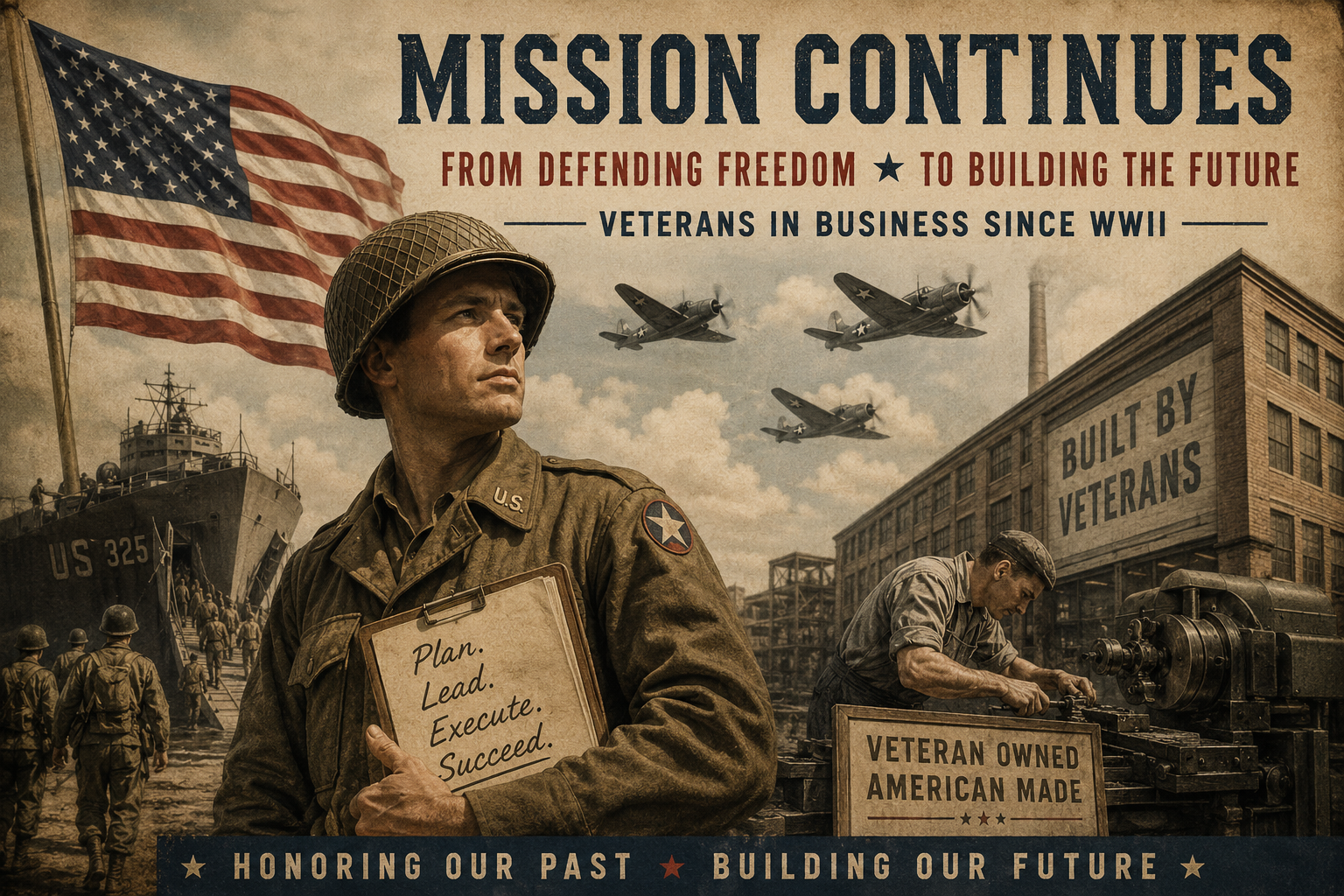
For more than two centuries, American veterans have answered the nation's call in times of war. Yet one of their greatest contributions has often come after they return home. Veterans have built companies, employed millions of Americans, introduced revolutionary products, strengthened local communities, and driven economic growth. While history often remembers veterans for battlefield victories, it is equally important to recognize their role in building the economic foundation of the United States.
Today, veteran-owned businesses represent one of the strongest segments of the American economy. According to the U.S. Census Bureau, there are approximately two million veteran-owned businesses across the United States, employing millions of workers and generating hundreds of billions of dollars in annual revenue. From small-town machine shops and family restaurants to multinational corporations and cutting-edge technology firms, veterans continue serving their country by creating opportunity instead of merely seeking employment.
Military service develops a unique combination of leadership, discipline, resilience, adaptability, and mission-focused thinking. Those same characteristics often translate remarkably well into entrepreneurship. While not every veteran becomes a successful business owner, military experience provides a foundation that few traditional business schools can replicate.
This is the story of how veterans helped build America's economy after World War II, how today's post-9/11 generation is carrying that legacy forward, and how the next generation of veteran entrepreneurs can continue that tradition.
The Greatest Economic Mobilization in American History
World War II and the Birth of America's Modern Middle Class
When nearly 16 million Americans returned home following World War II, the United States faced one of the largest transitions from wartime to peacetime in history.
The concern was enormous. How would the nation employ millions of returning soldiers, sailors, airmen, and Marines?
Rather than becoming an economic disaster, the post-war years became one of the greatest periods of prosperity in American history.
A significant reason was the Servicemen's Readjustment Act of 1944—better known as the GI Bill.
While the GI Bill is remembered for paying college tuition, its impact extended much further. Veterans gained access to low-interest home loans, vocational training, technical education, and business opportunities. Millions purchased homes, attended universities, learned skilled trades, and started companies.
Entire suburbs were built around veteran homeownership. Factories transformed into private manufacturing businesses. Small businesses emerged in nearly every town. Veterans who had spent years managing logistics across Europe or maintaining aircraft in the Pacific suddenly found themselves managing construction firms, machine shops, farms, transportation companies, and manufacturing plants.
Military leadership translated directly into civilian success.
The Post-War Entrepreneur
Many of America's recognizable companies either were founded by veterans or experienced explosive growth under veteran leadership.
Veterans entered nearly every sector:
- Manufacturing
- Construction
- Engineering
- Transportation
- Agriculture
- Retail
- Aviation
- Technology
They also helped normalize franchising across America.
Restaurants, automotive repair shops, gas stations, and retail stores became ideal opportunities for veterans seeking independence while utilizing the leadership skills they developed during service.
The disciplined approach learned during military service often proved invaluable. Mission planning became business planning. Supply chains replaced logistics convoys. Personnel management replaced squad leadership. Risk assessment remained exactly that—only the battlefield had changed.
Veterans Through the Cold War
Following Korea and Vietnam, veteran entrepreneurship continued expanding.
Many Vietnam veterans faced unique challenges reintegrating into civilian life. Public support differed dramatically from that experienced after World War II, yet many veterans still found success by building businesses rather than relying solely on traditional employment.
Manufacturing companies, automotive repair facilities, landscaping businesses, law enforcement consulting, security companies, and construction firms all saw substantial veteran participation.
Military experience remained valuable regardless of changing public opinion.
The Post-9/11 Generation
A New Kind of Veteran Entrepreneur
The Global War on Terror introduced a generation of veterans unlike any before.
These veterans operated in an increasingly digital economy. Instead of returning solely to factories or construction, many entered:
- Software development
- Cybersecurity
- Artificial intelligence
- E-commerce
- Digital media
- Consulting
- Aviation technology
- Defense innovation
- Healthcare startups
- Outdoor recreation
- Fitness
- Firearms training
- Content creation
Many had spent multiple deployments leading teams under extraordinary pressure. Those experiences built confidence in solving problems with incomplete information—a daily reality in entrepreneurship.
Why Veterans Make Exceptional Business Owners
Leadership
Service members routinely manage people, equipment, deadlines, budgets, and missions. Business ownership demands exactly those skills.
Adaptability
No military plan survives first contact unchanged. Veterans become comfortable making decisions under uncertainty. Markets change. Customers change. Technology changes. Veterans are accustomed to adapting quickly.
Mission Focus
Military members learn to focus on accomplishing objectives rather than making excuses. Successful entrepreneurs share that mindset.
Accountability
Veterans understand responsibility. When problems arise, they solve them. They rarely wait for someone else to fix the situation.
Team Building
Military success depends on teamwork. Businesses grow through strong teams rather than individual talent alone. Veterans often excel at building organizational culture.
Risk Management
Entrepreneurs take risks. Veterans learn how to calculate risk—not avoid it entirely. That distinction is critical.
Veteran-Owned Success Stories
Black Rifle Coffee Company
Founded by Army veteran Evan Hafer, Black Rifle Coffee Company grew from a small online coffee business into a nationally recognized lifestyle brand. The company employs thousands, supports veteran hiring initiatives, and has built a passionate customer community.
Grunt Style
Former Army Drill Sergeant Daniel Alarik transformed Grunt Style from a small T-shirt company into one of the nation's largest veteran lifestyle brands. The company's success demonstrates the power of authentic branding and strong community identity.
Ranger Up
Founded by Army veterans following deployments to Iraq and Afghanistan, Ranger Up helped pioneer veteran-focused apparel while supporting numerous veteran charities and nonprofit organizations.
Sword & Plough
Founded by sisters Emily and Betsy Nuñez, inspired by Emily's Army service, Sword & Plough repurposes military surplus materials into premium bags and accessories while employing veterans throughout the production process.
Bottle Breacher
Former Navy SEAL Eli Crane transformed surplus .50 caliber ammunition casings into bottle openers. The idea eventually appeared on Shark Tank, leading to national success and veteran employment opportunities.
Nine Line Apparel
Founded by veterans, Nine Line Apparel has become one of the country's largest patriotic apparel companies while supporting numerous military and first responder causes.
Countless Local Successes
Perhaps the most important veteran businesses never appear on television.
- HVAC companies
- Electricians
- Roofing businesses
- Restaurants
- Accounting firms
- Auto repair shops
- Insurance agencies
- Medical practices
- Real estate companies
- Farms
- Landscaping businesses
These companies strengthen communities every day while employing fellow veterans and civilians alike.
Why Veteran Businesses Matter
Veteran entrepreneurship creates far more than profits. It creates jobs, local investment, tax revenue, mentorship, innovation, and community stability.
Many veteran owners intentionally hire fellow veterans, understanding both the strengths and challenges of military transition. The result is an economic multiplier effect benefiting entire communities.
Starting a Veteran-Owned Business
For veterans considering entrepreneurship, today's resources are stronger than at any previous point in American history.
The challenge is rarely a lack of opportunity. Instead, it is knowing where to begin.
Choosing the Right Business Structure
Sole Proprietorship
Advantages:
- Simple to start
- Minimal paperwork
- Low startup costs
- Complete control
Disadvantages:
- Unlimited personal liability
- Difficult to raise capital
- Less credibility with investors
Best for: Small side businesses, freelancers, or testing a business idea.
Limited Liability Company (LLC)
The LLC has become one of the most popular structures for veteran-owned businesses.
Advantages:
- Personal liability protection
- Flexible taxation
- Easy administration
- Strong legal protection
- Relatively inexpensive to establish
Disadvantages:
- State filing fees
- Annual reporting requirements
- Self-employment taxes may still apply
Best for: Most small businesses. For many veterans, an LLC offers the best balance of simplicity and legal protection.
S Corporation (S-Corp)
An S-Corporation is a tax election rather than a separate business entity in many cases, often chosen after forming an LLC or corporation.
Advantages:
- Potential payroll tax savings
- Limited liability
- Professional appearance
- Easier ownership transfers
Disadvantages:
- More paperwork
- Payroll requirements
- IRS compliance rules
- Restrictions on ownership
Best for: Growing companies generating substantial profits.
C Corporation
Generally suited for companies seeking venture capital or public investment.
Advantages:
- Unlimited shareholders
- Easier investment opportunities
- Stock issuance
Disadvantages:
- Double taxation
- Significant administrative complexity
Best for: High-growth technology startups.
Partnerships
Useful when multiple founders bring complementary skills.
Advantages:
- Shared responsibilities
- Additional expertise
- Combined capital
Disadvantages:
- Shared liability, depending on structure
- Potential conflicts
- Profit sharing
Franchises
Veterans are frequently attracted to franchises because military experience aligns well with standardized operating procedures.
Examples include restaurants, fitness centers, home services, automotive businesses, and retail.
Advantages:
- Established brand
- Existing business systems
- Marketing support
- Training
Disadvantages:
- Franchise fees
- Less operational freedom
- Ongoing royalty payments
Online Businesses
Modern veterans increasingly launch Amazon stores, Shopify stores, consulting firms, podcasts, digital products, online education, and subscription businesses.
Advantages:
- Low startup costs
- Nationwide customers
- Flexible schedule
- High scalability
Disadvantages:
- Intense competition
- Digital marketing requirements
- Constant technology changes
Funding a Veteran-Owned Business
One of the biggest misconceptions in entrepreneurship is that veterans need to finance everything themselves. While there is no single "veteran grant" available to everyone, numerous financing options exist that can significantly reduce barriers to entry.
SBA Veterans Programs
The U.S. Small Business Administration (SBA) remains the single best starting point for most veteran entrepreneurs. While the SBA generally does not lend money directly, it guarantees loans made through participating banks and lenders, reducing risk and making financing more accessible.
Key SBA options include:
- SBA 7(a) Loans – Flexible financing for working capital, equipment, inventory, and expansion.
- SBA 504 Loans – Designed for purchasing commercial real estate or major equipment.
- SBA Microloans – Up to $50,000 for startups and small businesses.
The SBA also offers extensive counseling, business planning assistance, and local resource partners.
Veteran Readiness and Employment (VR&E)
Veterans with service-connected disabilities who qualify for VR&E may, in certain circumstances, receive support for self-employment. Depending on the individual's rehabilitation plan, assistance can include business plan development, specialized training, equipment, tools, initial supplies, and professional guidance.
This is one of the most underutilized entrepreneurial resources available to eligible veterans.
Military Reservist Economic Injury Disaster Loans (MREIDL)
Businesses affected when an essential employee is called to active duty may qualify for SBA disaster assistance to help maintain operations during the deployment.
Grants and Competitions
Although grants are limited compared to loans, several organizations offer funding through competitive programs, including:
- StreetShares Foundation Veteran Small Business Awards
- Second Service Foundation Entrepreneur Grants
- Bunker Labs pitch competitions
- Local state and regional veteran business grant initiatives
- Corporate-sponsored veteran entrepreneurship competitions
Because grant availability changes frequently, veterans should routinely monitor these organizations for current opportunities.
Community Development Financial Institutions (CDFIs)
CDFIs often provide small business loans, microloans, business coaching, and credit-building programs. Many focus specifically on underserved entrepreneurs, including veterans.
Organizations That Help Veterans Build Businesses
Launching a business is rarely a solo endeavor. Fortunately, an extensive network of organizations exists to help veterans navigate every stage of the entrepreneurial journey.
SBA Veterans Business Outreach Centers (VBOCs)
Veterans Business Outreach Centers provide business counseling, feasibility analysis, startup planning, marketing assistance, financial guidance, government contracting support, and business plan reviews.
For many veterans, a VBOC should be the first stop after deciding to pursue entrepreneurship.
SCORE
SCORE connects aspiring business owners with experienced volunteer mentors, many of whom are former executives, entrepreneurs, and veteran business leaders. Mentors provide one-on-one coaching, often at no cost.
Small Business Development Centers (SBDCs)
Located throughout the country, SBDCs assist entrepreneurs with market research, financial forecasting, export assistance, business strategy, and growth planning.
Bunker Labs
Bunker Labs focuses exclusively on military-connected entrepreneurs. Its programs emphasize networking, mentorship, accelerator opportunities, and peer support, helping veterans turn ideas into scalable businesses.
Institute for Veterans and Military Families (IVMF) at Syracuse University
Syracuse University's Institute for Veterans and Military Families is one of the premier veteran entrepreneurship organizations in the country.
Programs include:
- Entrepreneurship Bootcamp for Veterans (EBV)
- Veteran Women Igniting the Spirit of Entrepreneurship (V-WISE)
- Onward to Opportunity (O2O)
- CEOcircle mentorship
- Family-focused entrepreneurship initiatives
The EBV program, in particular, combines intensive business education with lifelong mentoring from faculty, alumni, and experienced entrepreneurs.
Warrior Rising
Warrior Rising offers mentorship, education, networking opportunities, and occasional funding to veteran entrepreneurs through structured programs that guide participants from idea development to business launch.
Boots to Business
Boots to Business, offered through the Department of Defense Transition Assistance Program in partnership with the SBA, introduces separating service members to the fundamentals of entrepreneurship before they leave active duty.
Topics include:
- Opportunity recognition
- Business planning
- Market analysis
- Financing
- Legal structures
- Operations
For many transitioning service members, it is an excellent first exposure to business ownership.
Forming Your Business
Once a business idea has taken shape, veterans will need to complete several practical steps to establish a legal entity.
These typically include:
- Selecting a business name.
- Conducting trademark and name availability searches.
- Registering the business with the appropriate state agency.
- Obtaining an Employer Identification Number (EIN) from the IRS.
- Opening a dedicated business bank account.
- Securing any required licenses and permits.
- Purchasing appropriate business insurance.
- Establishing bookkeeping and accounting systems.
- Creating contracts and operating agreements when applicable.
Many veterans choose to work with attorneys, certified public accountants (CPAs), or reputable online legal services to simplify the formation process. Regardless of the method, investing time in setting up the business correctly from the outset can prevent costly legal and financial issues later.
Government Contracting Opportunities
Veteran-owned businesses may also pursue government work through federal, state, and local contracting opportunities. While contract eligibility rules evolve over time, agencies often maintain programs that encourage participation by veteran-owned and service-disabled veteran-owned small businesses.
The SBA, the Department of Veterans Affairs, and individual procurement offices provide training on how to register, compete for contracts, and navigate the bidding process. For companies capable of serving government customers, contracting can become a significant source of long-term revenue.
The Importance of Networking
Successful entrepreneurs rarely succeed alone.
Veterans should actively participate in:
- Local Chambers of Commerce
- Veteran business associations
- Industry trade organizations
- SBA workshops
- Entrepreneurship conferences
- LinkedIn communities
- Veteran networking groups
Relationships frequently lead to partnerships, investors, customers, mentors, and future employees.
The Next Mission Begins with One Step
Starting a business can feel overwhelming, particularly after leaving the structured environment of military service. The legal paperwork, financial planning, marketing, and uncertainty can seem like unfamiliar terrain. Yet veterans have repeatedly demonstrated that they thrive in environments where the mission is difficult and the outcome uncertain.
The most important step is not filing paperwork or securing financing—it is identifying a genuine problem worth solving. The strongest businesses are built by entrepreneurs who understand the needs of the people they serve.
For most veterans, the ideal path begins with education and mentorship. Enrolling in programs such as Boots to Business or the Entrepreneurship Bootcamp for Veterans, meeting with a Veterans Business Outreach Center counselor, and connecting with SCORE mentors can provide the knowledge and confidence needed before investing significant time or money.
From there, veterans can refine their business idea, choose the appropriate legal structure—often an LLC for many first-time entrepreneurs—develop a realistic business plan, and explore financing through the SBA, community lenders, or veteran-focused organizations.
Military service teaches that no mission succeeds without planning, preparation, and teamwork. Entrepreneurship is no different.
The nation has long depended on veterans to defend its freedom. Today, it continues to rely on them to build companies, create jobs, strengthen communities, and inspire the next generation of innovators. Whether launching a neighborhood landscaping business, opening a family-owned restaurant, developing a cybersecurity startup, or founding the next nationally recognized brand, veteran entrepreneurs continue serving America in a different uniform.
The battlefield may have changed—but the mission to build a stronger nation endures.