
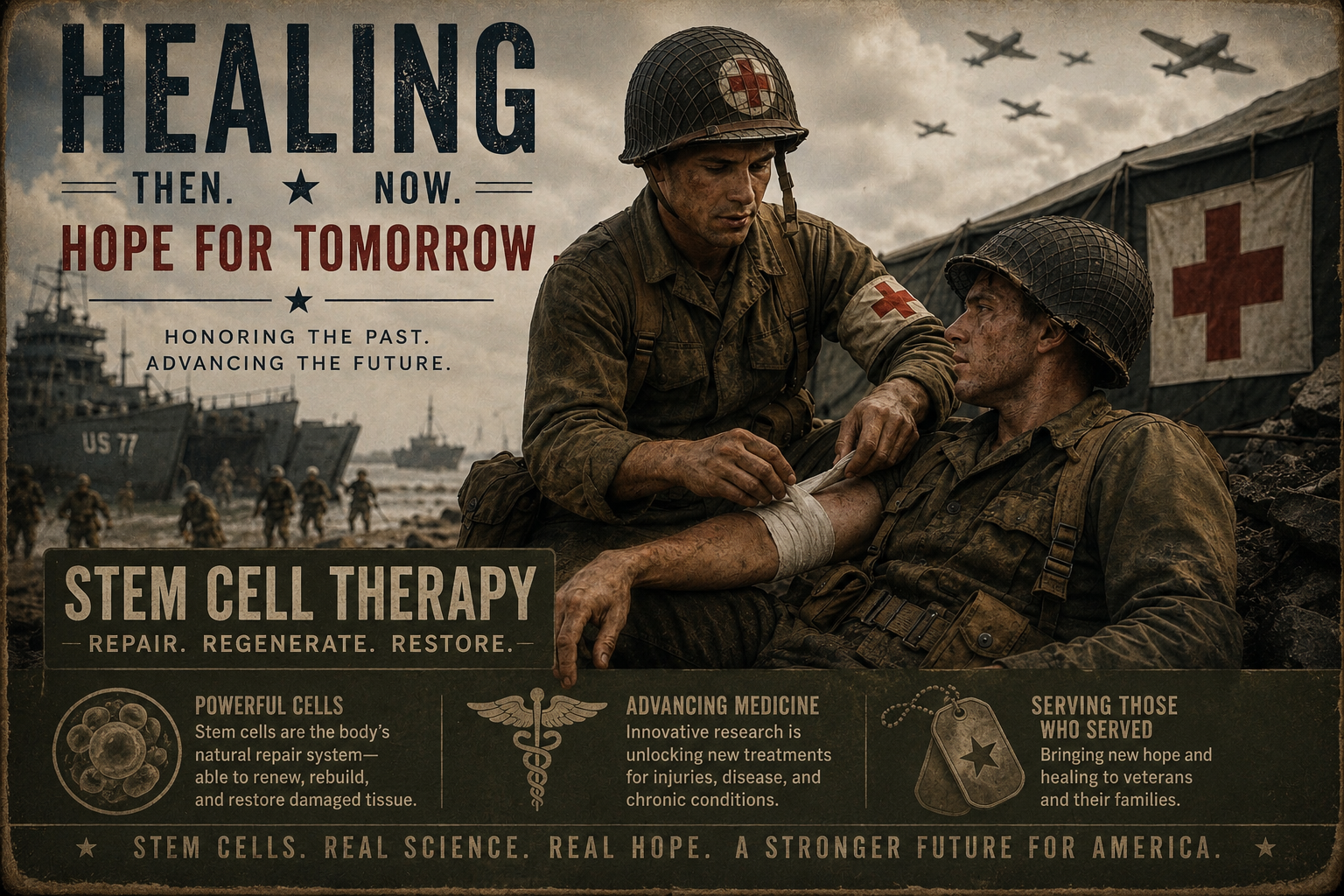
Few areas of modern medicine generate as much excitement—and as much confusion—as stem cell therapy. Depending on who is speaking, stem cells are described as a revolution capable of rebuilding the human body or as an overhyped treatment sold before the science is ready. The truth is more complicated. Stem cell medicine includes proven, lifesaving treatments that have been used for decades, promising therapies now moving through clinical trials, and unapproved procedures whose benefits have not yet been established.
For veterans, the stakes are especially high. Many former service members live with degenerative joint disease, traumatic injuries, chronic pain, spinal damage, nerve injuries, autoimmune conditions, toxic-exposure illnesses, and traumatic brain injuries. Conventional medicine can often manage those conditions, but it cannot always repair the underlying damage. Regenerative medicine is built around a different goal: helping the body restore function rather than merely controlling symptoms.
What Are Stem Cells?
Stem cells are unspecialized cells with two defining abilities. First, they can make additional copies of themselves. Second, under the right biological conditions, they can develop into more specialized cells such as blood, bone, cartilage, muscle, skin, or nerve cells. These abilities make them essential to normal growth, tissue maintenance, and repair.
Most cells in the body already have a specific assignment. A red blood cell carries oxygen. A nerve cell transmits signals. A heart-muscle cell contracts. Stem cells are different because they have not yet been locked into one role. Scientists are trying to understand how to direct these cells—or the substances they release—to replace damaged cells, reduce inflammation, influence immune activity, and stimulate the body's own repair systems.
The Major Types of Stem Cells
Embryonic Stem Cells
Embryonic stem cells are pluripotent, meaning they can develop into nearly any cell type in the human body. Their broad potential has made them scientifically valuable, but their origin has also produced long-running ethical and political debate. Research continues under federal and institutional rules, although many scientists are increasingly able to use other cell sources for work that once required embryonic cells.
Adult Stem Cells
Adult, or somatic, stem cells are found in developed tissues including bone marrow, blood, fat, skin, and muscle. They help maintain and repair the tissue in which they reside. Their developmental range is generally more limited than that of embryonic stem cells, but they are central to many established treatments and a large share of current regenerative-medicine research.
Hematopoietic Stem Cells
Hematopoietic stem cells produce the body's blood and immune cells. Bone marrow and blood-forming stem cell transplants have been used for decades to treat leukemia, lymphoma, multiple myeloma, certain immune deficiencies, sickle cell disease, and other serious disorders. These transplants remain the clearest example of stem cell therapy already operating as mainstream medicine.
Mesenchymal Stromal or Stem Cells
Mesenchymal stromal cells—often marketed as mesenchymal stem cells, or MSCs—can be obtained from sources including bone marrow, fat, and donated birth tissues. They are being studied for orthopedic injuries, inflammation, immune disorders, wound healing, and tissue repair. Scientists increasingly believe that much of their potential may come from signaling molecules they release rather than from permanently transforming into replacement tissue.
Induced Pluripotent Stem Cells
Induced pluripotent stem cells, known as iPSCs, are ordinary adult cells that have been genetically reprogrammed into a stem-cell-like state. They allow researchers to create disease models from a patient's own cells, test drugs, study inherited conditions, and potentially develop personalized therapies without relying on embryos. They are now a major research tool in work involving Parkinson's disease, diabetes, heart disease, ALS, retinal disease, and other conditions.
Proven Today
Blood-forming stem cell transplants are established treatments for multiple cancers, blood diseases, and immune disorders.
Under Investigation
Many orthopedic, neurological, cardiac, autoimmune, and anti-aging uses remain experimental.
How They May Help
Potential mechanisms include replacing cells, reducing inflammation, regulating immune activity, and releasing repair signals.
The Central Question
Researchers must prove which cell product, dose, delivery method, and patient population produce meaningful benefits.
How Stem Cell Therapies Are Delivered
The phrase stem cell injection can describe very different procedures. Some treatments use a patient's own bone marrow or fat-derived cells. Others use cells donated from a carefully screened donor. Some products are minimally processed, while others are isolated, expanded in a laboratory, combined with other materials, or manufactured under pharmaceutical-grade conditions.
Cells may be infused into the bloodstream, injected into a joint, placed near damaged tissue, delivered into the spinal fluid, or transplanted after chemotherapy has cleared diseased bone marrow. The method depends entirely on the disease, the cell type, and the research protocol. A treatment used successfully for leukemia cannot simply be assumed to work for arthritis, traumatic brain injury, or chronic pain.
Where Stem Cell Medicine Is Already Established
The strongest evidence remains in hematology and oncology. Blood-forming stem cell transplantation is used to rebuild the marrow and immune system after high-dose chemotherapy or to replace defective blood-forming cells. Certain tissue-based cellular therapies are also used in specialized areas such as serious burns and corneal repair.
These successes prove that stem cell medicine is real. They do not, however, validate every product marketed under the same label. Stem cells are not interchangeable, and evidence for one cell type or disease cannot automatically be transferred to another.
The Current Research Front
Orthopedic Injuries and Arthritis
Orthopedics is among the most visible areas of regenerative medicine. Researchers are testing cell-based products for knee osteoarthritis, cartilage damage, tendon injuries, rotator cuff tears, degenerative disc disease, and other musculoskeletal problems. Some studies report improvements in pain and function, but results vary, and researchers continue to debate whether the benefits exceed those produced by rehabilitation, placebo effects, platelet-rich plasma, or other treatments.
Neurological Disease and Traumatic Injury
Scientists are studying stem-cell-derived nerve and support cells for Parkinson's disease, stroke, spinal cord injury, multiple sclerosis, ALS, and traumatic brain injury. Early trials are primarily designed to establish safety, dosing, and biological activity. Repairing the nervous system is exceptionally difficult because transplanted cells must survive, integrate into complex circuits, and function without causing abnormal growth or immune complications.
Heart Disease
Heart researchers are exploring whether stem-cell-derived heart cells or regenerative signals can improve function after a heart attack or in advanced heart failure. Early enthusiasm has been tempered by mixed trial results, but newer manufacturing methods and more specialized cell types continue to move the field forward.
Diabetes
One of the most closely watched areas involves producing insulin-secreting pancreatic cells from stem cells. The goal is to restore insulin production in people with Type 1 diabetes. Researchers have demonstrated that transplanted cells can produce insulin in some patients, but immune rejection, durability, manufacturing, and the need for immune-suppressing medication remain major challenges.
Autoimmune and Inflammatory Conditions
Stem cell transplantation and MSC-based products are being investigated for multiple sclerosis, lupus, Crohn's disease, rheumatoid arthritis, and other immune disorders. In some cases, the goal is to reset a malfunctioning immune system. In others, researchers hope cellular signals can reduce damaging inflammation. These treatments can carry significant risks and should not be confused with routine wellness injections.
Where the United States Stands
The United States remains a global leader in stem cell science, biotechnology, and clinical trials. Universities, hospitals, federal agencies, and private companies are developing cell therapies under FDA oversight. The Food and Drug Administration regulates many stem cell products as biological drugs, which generally means they must pass through laboratory testing, controlled clinical trials, manufacturing review, and formal approval before being marketed for a disease.
The FDA has also created programs intended to accelerate promising regenerative products for serious conditions, including the Regenerative Medicine Advanced Therapy designation. These pathways can speed development and communication with regulators, but they do not eliminate the requirement to demonstrate safety and effectiveness.
At the same time, clinics across the country market stem cell procedures for arthritis, neurological disease, chronic pain, autism, erectile dysfunction, anti-aging, and other conditions. Many of those uses are not FDA-approved. Some may be offered as part of a legitimate clinical trial or under a narrow regulatory exception, while others may be sold with claims that extend far beyond the available evidence.
Important Patient Warning
A clinic's ability to offer a procedure does not mean the treatment has been proven effective or approved by the FDA for that condition. Patients should ask for the exact cell product, its source, the applicable FDA status, published evidence, known risks, total cost, follow-up plan, and whether the treatment is part of a registered clinical trial.
Why Veterans Are Watching Closely
Military service can leave behind combinations of injuries rarely seen in ordinary civilian medicine. Years of rucking, jumping, running, heavy equipment, vehicle vibration, blast exposure, repetitive impact, combat trauma, and physically demanding work contribute to joint degeneration, back and neck injuries, nerve damage, and chronic pain. Veterans may also face traumatic brain injuries, spinal cord damage, burns, toxic exposures, and autoimmune or inflammatory illnesses.
Many veterans are searching for options beyond repeated surgery, steroid injections, long-term pain medication, or activity restrictions. Regenerative medicine is appealing because it promises to address damaged tissue itself. The strongest veteran applications today remain those supported by established transplant medicine and participation in carefully designed clinical trials. For most orthopedic, neurological, and chronic-pain applications, the field is still determining who benefits, how much improvement is realistic, and how long any benefit lasts.
BioXcellerator and Treatment Outside the United States
BioXcellerator is a private regenerative-medicine company that operates a treatment center in Medellín, Colombia. It has become highly visible among veterans, athletes, and patients seeking access to expanded mesenchymal cell products that are generally not available in the same form as approved treatments inside the United States.
The company promotes programs for orthopedic injuries and a range of chronic or degenerative conditions. Patients typically undergo medical screening, consultation, laboratory testing, and a treatment plan that may include intravenous or targeted delivery of donor-derived cells, depending on the condition. BioXcellerator also emphasizes patient coordination and follow-up for people traveling internationally.
Supporters point to patient testimonials describing reduced pain, improved mobility, and better quality of life. Testimonials can help explain individual experiences, but they cannot establish how often a therapy works or whether it outperforms standard care. Patients considering treatment abroad should understand that U.S. approval standards may not apply, long-term data may be limited, insurance usually does not cover the cost, and complications may have to be managed after returning home.
The rise of companies such as BioXcellerator demonstrates something important: there is substantial demand for regenerative treatments among people who believe conventional options have been exhausted. That demand is one reason researchers and advocates are pushing to move credible therapies through U.S. trials more quickly without abandoning safety standards.
Making Regenerative Therapies Available in America
Several efforts are helping build the path toward broader domestic access. Federal research funding supports basic stem cell science and early-stage therapy development. The Department of Veterans Affairs and Department of Defense participate in regenerative-medicine research involving wound healing, limb trauma, bone and muscle repair, spinal injury, and other service-relevant conditions. Academic medical centers are running clinical trials that allow qualifying veterans and civilians to receive investigational treatments under formal safety monitoring.
Public-private research partnerships are also working to improve cell manufacturing, standardize treatment products, and reduce costs. One major challenge is that living cells are more difficult to manufacture and distribute than ordinary pills. Their identity, purity, potency, storage, transport, and behavior inside the body must be carefully controlled from one dose to the next.
Some states have passed right-to-try or expanded-access laws intended to help seriously ill patients obtain investigational treatments. Federal expanded-access pathways may also allow certain patients who cannot enter a clinical trial to request an experimental therapy. These programs do not guarantee access, and manufacturers, physicians, regulators, and medical institutions must agree that the potential benefit justifies the risk.
What Veterans and Civilians Should Ask
Anyone considering a stem cell procedure should approach it with the same seriousness they would bring to surgery. A reputable provider should be able to answer direct questions without resorting to vague promises.
- What exact type of cells will be used, and where do they come from?
- Is the product FDA-approved for this specific condition?
- If it is experimental, is it part of a registered clinical trial?
- What peer-reviewed evidence supports the treatment?
- What are the known and unknown risks?
- How many similar patients has the team treated?
- What outcome is realistic, and how will improvement be measured?
- Who manages complications or long-term follow-up?
- What is included in the price, and what happens if the treatment does not work?
The Risks That Cannot Be Ignored
Stem cell products can cause infection, immune reactions, blood clots, abnormal tissue growth, treatment-site damage, worsening inflammation, or other complications. Products manufactured or handled poorly may be contaminated or may not contain what the clinic claims. Procedures involving the eye, spinal cord, brain, heart, or bloodstream can be particularly dangerous.
Another risk is financial. Many experimental treatments cost thousands or tens of thousands of dollars and are not covered by insurance. Patients may pay for travel, lodging, rehabilitation, and follow-up care in addition to the procedure itself. Hope is powerful, but it can also make people vulnerable to aggressive marketing.
What the Future May Hold
The long-term possibilities are extraordinary. Scientists are working toward lab-grown replacement tissues, personalized disease models, stem-cell-derived organs, repaired spinal cords, regenerated cartilage, restored insulin production, and replacement neurons for degenerative brain disease. Some of these goals may be years away; others are already entering early human trials.
The field will likely advance unevenly. Certain treatments will prove effective and become standard care. Others will fail in trials despite encouraging laboratory results. The most important progress may come not from one universal stem cell cure, but from highly specific products designed for one disease, one tissue, and one carefully selected group of patients.
Final Thoughts
Stem cell therapy is neither fantasy nor a universal miracle. It is a broad and rapidly developing branch of medicine that already saves lives while pushing into areas once considered impossible to treat. Its future depends on good science, transparent regulation, careful manufacturing, ethical access, and honest communication with patients.
For veterans, regenerative medicine represents the possibility of more than temporary relief. It raises the hope that one day medicine may restore damaged joints, nerves, muscles, organs, and mobility lost through years of service. Organizations offering treatment abroad have highlighted both the demand and the desperation that exist today. The mission now is to bring the most effective therapies home through credible research and responsible access.
The promise is not that every injury can be erased. The promise is that modern medicine is learning how the body repairs itself—and how that knowledge might help those who have carried the physical cost of service for far too long.
Sources and Further Reading
- U.S. Food and Drug Administration: Consumer information and alerts on regenerative medicine products
- U.S. Food and Drug Administration: Resources related to regenerative medicine therapies
- National Cancer Institute: Stem cell transplants in cancer treatment
- National Institutes of Health: Stem Cell Information
- ClinicalTrials.gov: Search federally registered stem cell and regenerative-medicine studies
- U.S. Department of Veterans Affairs: Office of Research and Development
- BioXcellerator: Patient and treatment information