
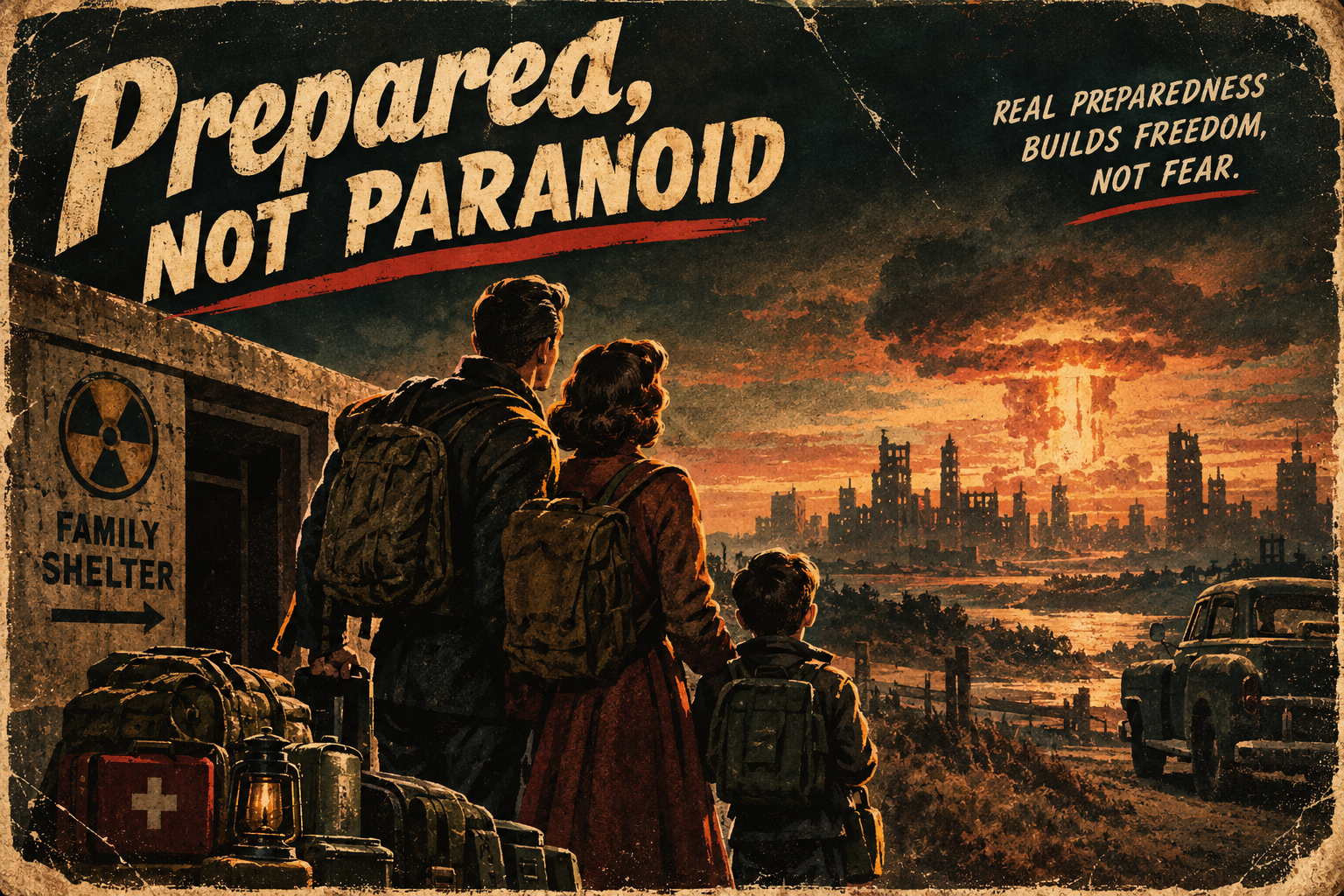
When the lights go out, the water stops running, and the grocery store shelves are empty, will you be ready?
Introduction: Preparation Is Not Paranoia
Somewhere along the way, the word prepper became associated with underground bunkers, stockpiles of ammunition, and people convinced that civilization is perpetually three days away from collapse. Hollywood certainly hasn't helped.
But disaster preparedness is not about predicting the apocalypse. It is about understanding that the systems supporting our everyday lives are more fragile than most Americans realize.
Consider how much of your daily existence depends on infrastructure you don't control. Electricity powers your refrigerator, heats or cools your home, operates gas pumps, and keeps cellular networks functioning. Municipal water systems depend on electricity, treatment chemicals, functioning equipment, and distribution networks. Grocery stores rely on transportation networks, distribution centers, electronic payment systems, and continuous deliveries. Emergency services depend on communications, accessible roads, personnel, and functioning hospitals.
Most of the time, these systems work remarkably well. Until they don't.
Hurricanes, blizzards, wildfires, flooding, cyberattacks, extended blackouts, infrastructure failures, and civil emergencies can interrupt the services we take for granted. And disasters don't have to be catastrophic to become dangerous. A three-day winter power outage can threaten a family without an alternative heat source. A contaminated municipal water supply can leave an entire neighborhood scrambling for bottled water. A flooded roadway can prevent emergency responders from reaching someone experiencing a medical emergency.
Preparedness is simply the process of reducing your dependence on systems that may temporarily fail. The objective isn't to become completely self-sufficient overnight. It is to build resilience, one practical step at a time.
Part I: Understanding the Hierarchy of Survival
Before purchasing equipment, stockpiling food, or building an elaborate emergency shelter, it is important to understand what human beings actually need to survive. One of the biggest mistakes beginners make is preparing for dramatic scenarios while overlooking basic necessities. Someone might spend thousands of dollars on tactical equipment while having no reliable way to obtain drinking water during a prolonged outage. That's backward.
1. Maslow's Hierarchy of Needs
Psychologist Abraham Maslow introduced his hierarchy of needs in 1943. His framework describes several categories of human needs, traditionally represented as a pyramid. From the bottom upward, these are:
- Physiological needs: Air, water, food, sleep, warmth, and other biological necessities.
- Safety needs: Physical security, shelter, health, and stability.
- Love and belonging: Family, friendships, relationships, and community.
- Esteem: Confidence, competence, respect, and personal accomplishment.
- Self-actualization: Personal growth, purpose, and fulfillment.
Maslow's model is a useful way to think about preparedness, although human needs do not always follow a rigid sequence. During an emergency, however, the lesson is straightforward: your immediate physical needs and safety must receive attention before less urgent concerns. Shelter, clean water, essential medications, sanitation, and food generally take priority over convenience items or elaborate defensive equipment.
But survival also depends on something people frequently overlook: relationships. A family with limited supplies but strong relationships with capable neighbors may be more resilient than an isolated individual with an expensive collection of survival gear. We will return to that point later.
2. The Rule of Threes
Survival instructors often teach a simplified concept known as the Rule of Threes:
| Survival Need | Common Rule of Thumb |
|---|---|
| Without breathable air | Approximately 3 minutes |
| Without adequate protection from extreme exposure | As little as 3 hours |
| Without drinking water | Approximately 3 days |
| Without food | Approximately 3 weeks |
These are teaching approximations, not medical deadlines or reliable survival limits. Actual survival time varies tremendously depending on age, health, temperature, physical activity, injuries, and environmental conditions. Severe heat can cause life-threatening dehydration or heat illness much faster than three days. Cold-water immersion or extreme cold can become deadly in minutes, and some people may survive without food considerably longer than three weeks. The lesson is to understand priorities, not memorize a countdown.
Air and Breathing
Smoke, carbon monoxide, toxic gases, and oxygen-deficient environments can become immediately life-threatening. Smoke alarms and carbon monoxide detectors are essential preparedness equipment. Know how to evacuate a burning building, recognize unsafe air conditions, and shelter indoors when authorities advise doing so. Never enter an oxygen-deficient or contaminated space without appropriate professional equipment and training.
Shelter and Temperature
Exposure is frequently underestimated. A person can have plenty of food and water and still die from hypothermia or heatstroke. Your home normally provides protection. But what happens when the heating system stops during a January blizzard, or air conditioning fails during a prolonged heat wave? Preparing for extreme temperatures should be one of your earliest priorities.
Water
Water is one of the most critical resources during a prolonged emergency. Humans need it for drinking, cooking, sanitation, and basic hygiene. A household can run out of usable water surprisingly quickly.
Food
Food becomes increasingly important as an emergency stretches from days into weeks. Although a healthy adult may survive an extended period without food, hunger reduces physical performance, concentration, mood, and decision-making ability. Children, pregnant individuals, older adults, and people with certain medical conditions may face serious consequences much sooner.
Medical Needs
The Rule of Threes overlooks something critical. A person dependent on insulin, oxygen, dialysis, or another essential treatment may face a medical emergency long before running out of food or water. Preparedness must account for individual medical requirements, not just the needs of an average healthy adult.
Part II: Bugging In vs. Bugging Out
Two phrases frequently appear in survival discussions: bugging in and bugging out. Understanding the difference can prevent one of the most dangerous mistakes people make during an emergency.
Bugging In: Staying Home
Bugging in means remaining at your residence during a disaster rather than evacuating. In many emergencies, staying home is the safer and more practical choice, provided the building and surrounding area remain safe.
Your home already contains shelter, clothing, food, water, medications, tools, bedding, and familiar surroundings. You know the layout and neighborhood. You have access to equipment impossible to carry on your back. Most importantly, you aren't exposing your family to additional hazards by traveling unnecessarily.
During a widespread emergency, roads may become congested or impassable. Gas stations may be closed. Hotels may be full. Cellphone service may be unreliable. Evacuating without a clear destination can turn a manageable situation into a dangerous one. For a short-term power outage, winter storm, or supply-chain disruption, a properly equipped home is often the best place to remain. But staying home is not always right.
When Bugging Out Becomes Necessary
Bugging out means leaving your home for a safer location. Evacuation may be necessary for mandatory evacuation orders, approaching wildfires, rising floodwaters or storm surge, unsafe structural damage, hazardous-material incidents, gas leaks, medical needs that cannot be supported at home, or serious security threats.
The decision should be based on actual conditions, official warnings, and your family's needs. Never allow the desire to protect your property to override the need to protect your family. If officials order an evacuation, leave promptly using designated routes.
The Three-Option Preparedness Plan
Option A: Shelter at Home
Your primary plan when the residence remains safe: supplies, communications, heating or cooling contingencies, and some independence.
Option B: Local Evacuation
A predetermined safer destination nearby, such as a relative's home, hotel, or official shelter. Establish more than one destination and route.
Option C: Regional Evacuation
A longer-distance destination for widespread emergencies, with fuel, pets, accessibility needs, and blocked highways considered.
Family Considerations
Children, elderly relatives, pets, and people with medical needs make advance planning especially important.
The objective is to make these decisions before an emergency forces you to make them under pressure.
Part III: The Bug-Out Bag
Everything You Need When You Have to Leave
A bug-out bag is a portable collection of essential supplies designed to support an emergency evacuation. It is not intended to carry everything required to survive indefinitely in the wilderness. For most families, it is closer to a well-organized emergency travel kit. Each capable family member should have a bag appropriate for their age, physical ability, and needs. Children should not carry heavy survival equipment.
Essential Bug-Out Bag Checklist
| Category | Recommended Equipment |
|---|---|
| Water | Drinking water and portable water filter |
| Food | Ready-to-eat meals, energy bars, nonperishable snacks |
| Clothing | Weather-appropriate layers, socks, rain protection |
| Shelter | Emergency blanket, compact tarp, lightweight shelter |
| Lighting | Headlamp, flashlight, spare batteries |
| Communication | Battery-powered or hand-crank weather radio |
| Power | Charged power bank and cables |
| Medical | First-aid kit, essential medications, personal medical supplies |
| Hygiene | Toilet paper, wipes, sanitizer, menstrual products |
| Documents | Copies of ID, insurance, medical information |
| Money | Small-denomination cash |
| Tools | Multitool, duct tape, cordage, whistle |
| Navigation | Paper maps and written destination information |
| Protection | Work gloves, appropriate masks, eye protection |
| Family Needs | Infant supplies, pet supplies, comfort items |
Water and Filtration
Carry water for immediate travel while remembering that one liter weighs approximately 2.2 pounds. A portable filter can help when suitable freshwater is available, but most backpacking filters do not reliably remove viruses, dissolved chemicals, fuel, or salt. Chemical spills and contaminated floodwater may make ordinary portable filtration inadequate. Choose treatment based on the hazards it actually addresses.
Medical Supplies
Pack bandages, sterile dressings, gloves, antiseptic supplies, and household-appropriate medications. People trained in bleeding control may carry tourniquets and pressure dressings. Training matters more than simply owning equipment. Keep an updated prescription list and discuss emergency refill options with a pharmacist or healthcare provider.
Clothing and Footwear
Pack durable footwear, socks, insulating layers, and rain protection suitable for your region. A Florida hurricane kit differs from a New York winter kit.
Documents
Store copies of identification, insurance, emergency contacts, medical information, and pet vaccination records in a waterproof pouch. Encrypted digital copies add redundancy; protect sensitive information.
Cash
Electronic payments may fail during outages. Small bills may be useful when businesses operate without normal payment systems.
Special Considerations for Children
Include familiar snacks, comfort items, spare clothes, medications, and age-appropriate activities. A favorite stuffed animal can provide emotional comfort during evacuation.
Vehicle Emergency Kit
Keep jumper cables or a jump starter, reflective triangles, flashlight, first aid, water, snacks, seasonal blankets and clothing, phone charger, tire-changing equipment, and paper maps in the vehicle. Add cold-weather equipment in winter. Never rely on a running vehicle for warmth inside an enclosed garage or poorly ventilated area.
Part IV: Building Your Home Emergency Supply System
Start With 72 Hours. Build Toward Two Weeks.
Federal emergency preparedness guidance commonly recommends maintaining at least three days of essential supplies. Building toward two weeks provides a stronger buffer against prolonged disruptions; some households may choose larger reserves. Don't attempt to buy six months of supplies in one trip. Build gradually.
1. Water Storage
A common baseline is one gallon of water per person per day, primarily for drinking and basic sanitation. More may be needed in heat or for medical needs. For a family of four:
| Duration | Minimum Water Supply |
|---|---|
| 3 days | 12 gallons |
| 7 days | 28 gallons |
| 14 days | 56 gallons |
| 30 days | 120 gallons |
These are starting points, not guarantees. Pets, cooking, medical needs, and hygiene may increase consumption.
Water Storage Options
- Commercially bottled water: Convenient and easy to rotate according to packaging guidance.
- Food-grade storage containers: Reusable containers designed for potable water.
- Larger water tanks: Appropriate where space and structural support allow.
- Rainwater collection: Potentially useful for gardening and nonpotable purposes, subject to rules and treatment.
- Water treatment equipment: Filters, purification systems, and suitable disinfection supplies.
Water from roofs, streams, ponds, or flooded areas should never automatically be considered safe. Boiling kills many disease-causing organisms but does not remove chemical contamination. Private-well households should plan for an electric pump outage; stored water is often the simplest initial solution.
2. Emergency Food Storage
Forget the stereotype of a basement filled with expensive freeze-dried meals. Start a deep pantry: buy extra quantities of foods your family already eats, use the oldest first, and replace them during regular shopping.
| Food | Why It Works |
|---|---|
| Canned vegetables | Shelf-stable, easy to prepare |
| Canned beans | Protein, fiber, calories |
| Canned meat and fish | Convenient protein |
| Peanut butter | Calorie-dense, no cooking |
| Rice | Inexpensive, versatile |
| Pasta | Familiar and storable |
| Oatmeal | Breakfast staple |
| Crackers | Ready to eat |
| Dried fruit | Portable calories |
| Nuts | Fats, protein, energy |
| Shelf-stable milk | Useful for children and cooking |
| Ready-to-eat meals | Minimal preparation |
Rice, pasta, and dried beans require cooking water and fuel. Include food that can be eaten without cooking.
How Much Food Do You Need?
For a family of four eating three meals daily, three days require about 36 individual meals; seven days, 84; and fourteen days, 168. This is a planning illustration, not a nutritional calculation. Actual needs vary by age, activity, health, and diet.
Food Storage Rules
Keep food cool, dry, and protected from pests and moisture. Label purchases, rotate supplies, and keep a manual can opener. Do not consume bulging, leaking, or badly damaged cans. Follow food-safety guidance after flooding.
3. Emergency Cooking
Alternatives may include outdoor propane camp stoves, outdoor charcoal grills, properly installed wood-burning cookstoves, solar cookers, and ready-to-eat food. Never use charcoal grills, camping stoves, outdoor propane burners, or gasoline generators inside homes, garages, tents, or enclosed porches. Carbon monoxide can be deadly. Follow manufacturer-approved locations.
Part V: Preparing for the Loss of Electricity
When the Grid Goes Down
Extended outages affect heating, refrigeration, water pumps, communications, transportation, and medical equipment. Focus on essential functions, not powering every appliance.
Step One: Identify Critical Electrical Needs
List refrigeration for medications, essential medical devices, communications, limited lighting, well pumps, heating controls, refrigerators, and freezers. Check each item's electrical demand. A small power station may run lights and phones but not a furnace or whole-house air conditioning.
Step Two: Build a Layered Backup Power System
Battery Banks
Inexpensive and useful for phones, tablets, and small electronics. Maintain at least one reliable way to recharge essential communications.
Portable Power Stations
Battery systems can run selected small appliances and medical devices depending on specifications. They are quiet and exhaust-free in operation, but capacity is finite.
Solar Panels
Portable solar panels can recharge compatible batteries. Output depends on sunlight, weather, placement, and equipment; never assume dependable production during every storm.
Portable Generators
Gasoline, propane, and dual-fuel generators provide substantial power but require fuel, maintenance, and safe operation. Keep generators outdoors, well away from doors, windows, vents, and openings, following manufacturer guidance. Never backfeed household wiring through an improvised outlet. Have a qualified electrician install an approved transfer switch or interconnection.
Whole-House Standby Generators
Permanent systems may provide automatic backup power. They cost more but can be valuable for critical medical or infrastructure needs. Evaluate fuel, installation, maintenance, and capacity.
Step Three: Prepare for Refrigeration Loss
Keep doors closed. Federal guidance estimates an unopened refrigerator keeps food safe about four hours; a full freezer about 48 hours; and a half-full freezer about 24 hours. Use appliance thermometers and food-safety guidance. When in doubt, throw it out.
Step Four: Prepare for Temperature Extremes
In cold weather, weatherstrip doors, seal appropriate drafts, close curtains, and use warm layers and bedding. Relocate if the home becomes dangerously cold. Never heat a home with a gas oven or outdoor cooking equipment. In hot weather, prioritize hydration, safe ventilation, shade, reduced solar heat gain, and cooling centers. Heat is particularly dangerous for older adults, infants, and people with chronic illness.
Part VI: Preparing for Water System Failure
What Happens When the Tap Runs Dry?
Water disruptions can result from power outages, broken mains, contamination, drought, flooding, or treatment-system failures. Prepare for two different problems: no water available, and water available but unsafe to drink.
Stored Drinking Water
Maintain potable water in suitable containers protected from contamination. Follow established cleaning, sanitizing, and replacement guidance for reusable containers.
Water Filtration
- Sediment filters: Remove particles but generally do not make contaminated water microbiologically safe.
- Backpacking filters: Many remove bacteria and protozoa; not all remove viruses.
- Reverse osmosis: Can remove many contaminants when properly designed and maintained, but may require pressure or power.
- Activated carbon: May improve taste and reduce specific chemicals depending on certification; not a complete purification system.
Choose equipment based on independently verified performance claims.
Emergency Water Disinfection
Boiling addresses many biological contaminants when authorities recommend it. CDC guidance generally calls for a rolling boil for one minute below 6,500 feet, and three minutes above that elevation. Chemical disinfection may also be appropriate when following authoritative instructions. Neither boiling nor ordinary emergency disinfection makes chemically contaminated or radioactive water safe. Follow local public-health guidance.
Sanitation Without Running Water
If toilets cannot flush, waste management becomes urgent. Store heavy-duty bags, disposable gloves, toilet paper, sanitizer, soap, disinfectant, and a camping toilet or appropriate emergency sanitation system. A bucket-style toilet can use a secure seat, heavy-duty liners, and waste-handling supplies. Dispose of waste according to local health guidance; never dump untreated waste near drinking-water sources.
Part VII: Preparing for a Food Supply Disruption
What If the Grocery Stores Stay Empty?
Transportation interruptions, severe weather, regional disasters, and prolonged outages can disrupt food distribution without a national catastrophe. Plan for stored food and practical ways to supplement it.
Build a Deep Pantry
Start with an additional week of familiar food, then build toward two weeks. After establishing rotation, consider a month or more if budget and space permit. Avoid buying unfamiliar emergency food simply because it promises a long shelf life.
Learn Basic Food Preservation
Dehydrating removes moisture from suitable foods. Canning uses tested procedures and equipment. Freezing works when power is available. Fermentation requires appropriate recipes and safe handling. For canning, use tested USDA or National Center for Home Food Preservation recipes. Low-acid foods require proper pressure canning; improvised methods can cause fatal botulism.
Start a Garden
Even a small garden can supplement food supplies. Try region-appropriate potatoes, beans, tomatoes, lettuce, carrots, or squash. Container gardens work in limited space. Gardening takes practice; a garden started during a disaster won't immediately replace a grocery store.
Learn to Save Seeds
Seed saving can sustain some crops across seasons, but varieties differ. Learn about open-pollinated versus hybrid seeds and proper storage.
Consider Small-Scale Food Production
Depending on local regulations, property, and circumstances, consider vegetable gardens, fruit trees, berry bushes, backyard chickens, composting, or rainwater collection for irrigation. These activities offer normal-time benefits but require work, money, and maintenance. Self-sufficiency is a process, not a product.
Part VIII: Home Security During an Emergency
Protecting Your Family Without Turning Your Home Into a Fortress
Disaster discussions sometimes become dominated by images of looting and desperate strangers. Security is legitimate, but perspective matters: many disaster survivors help one another. Prolonged disruptions can still create opportunities for theft, trespassing, fraud, and other crimes. The answer is layered, practical security—not paranoia.
Layer One: Awareness
Know your neighborhood and normal traffic patterns. Stay in contact with trusted neighbors and follow credible local emergency information. Awareness often prevents escalation.
Layer Two: Exterior Lighting
Motion-activated lights can discourage opportunistic trespassing. Consider solar or battery-backed lights for outages; keep entrances and walkways visible.
Layer Three: Doors and Windows
Consider solid exterior doors, quality deadbolts, reinforced strike plates, secure frames, window locks, appropriate security film, and maintained gates. Never block safe emergency exits.
Layer Four: Cameras and Alarms
Cameras can monitor entrances and document incidents, but many depend on electricity and internet. Consider battery backup, local recording, and how alarms operate during outages.
Layer Five: Secure Your Supplies
Avoid advertising emergency stockpiles, fuel, or valuables. Secure hazardous materials appropriately and protect documents.
Layer Six: Establish a Family Security Plan
Teach household members to keep doors locked, avoid confrontation, move away from threatened entrances, call emergency services when available, retreat to a designated safe room, and leave if a safe route exists. A safe room may simply be a lockable interior room with communications, supplies, and a planned exit.
What About Firearms?
For households that legally own firearms, secure storage, training, judgment, and knowledge of applicable laws are essential. Prevent unauthorized access, especially by children. Avoid confrontation whenever possible. Protecting life matters more than defending property. Firearms do not replace locks, lighting, communication, or evacuation planning.
Avoid Dangerous Security Traps
Never install booby traps, electrified barriers, or devices designed to injure trespassers. They endanger children, neighbors, responders, and family members and may violate the law.
Part IX: Medical Readiness and Hygiene
The Emergency Room May Not Be Available
Hospitals and emergency services may be overwhelmed or unreachable. Basic medical readiness matters.
Build a Household Medical Kit
Include adhesive bandages, sterile gauze, medical tape, disposable gloves, antiseptic supplies, thermometer, tweezers, suitable over-the-counter medications, oral rehydration supplies, personal prescriptions, and emergency contacts. Additional supplies may fit trained responders or specific medical needs.
Learn Basic First Aid
Useful courses include CPR and AED use, basic first aid, Stop the Bleed, and wilderness first aid for situations with delayed professional care. Training may be the most valuable investment.
Prepare for Prescription Disruptions
Keep a current list of medications, doses, allergies, and providers. Discuss emergency refills with your medical team. Never ration essential medication or change treatment without medical advice.
Hygiene Is Survival
Handwashing, safe food handling, clean water, waste disposal, and wound care reduce preventable illness. Months of food with no sanitation plan is not readiness.
Part X: Communication When the Networks Fail
When You Can't Make a Phone Call
Cellular networks can become congested, lose power, or suffer damage; internet access may fail. Maintain multiple ways to receive emergency information.
NOAA Weather Radio
NOAA Weather Radio broadcasts forecasts and alerts in served areas. Battery backup is valuable.
Battery-Powered AM/FM Radio
Local stations may continue sharing emergency information when other services are unavailable.
Family Communication Plan
Identify a primary meeting place, an alternate meeting place, an out-of-area contact, and a way to communicate if cellular service fails. Texts sometimes work when calls do not, but neither is guaranteed.
Satellite Communication Devices
Satellite messengers may work outside cellular coverage, but can require subscriptions, open sky, and functioning satellite services.
Amateur Radio
Licensed amateur operators may communicate via repeaters or longer-distance systems with suitable equipment and skill. The American Radio Relay League offers licensing and emergency communication information. Practice before a crisis.
Part XI: The Human Element — Family, Neighbors, and Community
The Most Valuable Survival Resource Might Live Next Door
The lone survivor defending a cabin is a popular image, but real disasters often bring neighbors sharing generators, clearing trees, distributing meals, checking older residents, and supporting shelters. Cooperation strengthens resilience.
Build Relationships Before You Need Them
Get to know neighbors, including those who may need help evacuating. Skills in nursing, electrical work, plumbing, carpentry, mechanics, radio, farming, gardening, and emergency response become more valuable when shared.
Establish a Neighborhood Preparedness Network
A voluntary group can exchange contact information, discuss local hazards, check on vulnerable neighbors, share shelter and evacuation information, coordinate training, and consider shared emergency resources. Respect privacy and local laws.
Skills Matter More Than Gear
Repairing a pipe, administering first aid, maintaining equipment, gardening, and communicating can matter more than owning expensive unused supplies. No household needs to master everything.
The Psychological Side of Survival
Disasters create stress, fear, uncertainty, and exhaustion. Routines, reassurance for children, reliable information, rest, relationships, and manageable tasks help morale. Veterans will recognize the value of teamwork: a resilient neighborhood, like a capable unit, draws on different people and skills.
Part XII: Building Your Preparedness Plan on a Budget
You Don't Need to Spend Thousands of Dollars
Phase One: The First Weekend
Objective: Establish a basic family emergency plan. Identify hazards and evacuation routes; set meeting places; create emergency contacts; test smoke and carbon monoxide alarms; locate utility shutoffs; identify essential medications; and gather documents. Many steps cost little or nothing.
Phase Two: The First Month
Objective: Build a 72-hour supply. Gather three days of water and food, flashlights and batteries, first aid, weather radio, hygiene supplies, emergency clothing, and a power bank. Buy one or two items weekly if necessary.
Phase Three: Months Two and Three
Objective: Extend household independence. Build toward seven to fourteen days of water, two weeks of food, safe emergency cooking, stronger medical supplies, evacuation bags, backup communication, and heating or cooling contingencies.
Phase Four: Months Four Through Six
Objective: Address infrastructure vulnerabilities. Consider portable backup power, extra water, weatherization, exterior lighting, door and window security, medical training, and appropriate water treatment.
Phase Five: Long-Term Resilience
Objective: Develop sustainable capabilities. Consider gardening, preservation, expanded backup power, appropriate rainwater collection, amateur radio, advanced first aid, neighborhood coordination, and energy efficiency. Fit your plan to budget, property, health needs, and local hazards.
Part XIII: Know Your Threats
Prepare for What Is Likely Before What Is Dramatic
A coastal New York family faces different hazards than a family in Arizona or Colorado. Plan for your location.
Hurricanes and Coastal Storms
Know evacuation zones and flood risks; plan routes, backup power, water, and document protection.
Winter Storms
Prioritize safe heat, insulation, food, water, snow-removal equipment, and transportation disruptions.
Wildfires
Prepare for rapid evacuation, smoke, defensible space, and changing roads. Don't wait until flames are visible.
Flooding
Know flood risks, elevate documents and equipment, and never drive through floodwater.
Earthquakes
Secure heavy furniture, anticipate falling objects, and learn protective actions.
Extreme Heat
Plan cooling, hydration, medical contingencies, and power-outage responses.
Cyberattacks and Infrastructure Failures
Utility or transportation cyberattacks can create effects resembling natural disasters. Water, food, communications, cash, and backup power still matter.
Civil Emergencies and Security Incidents
Avoid active danger, follow credible instructions, communicate with family, and shelter or evacuate according to the threat. For hazardous airborne releases, indoor shelter may require closing windows and shutting off outdoor-air ventilation; for fire or flooding, remaining inside may be deadly. There is no universal shelter-in-place rule.
Part XIV: The Preparedness Inventory
What Should Every Household Eventually Have?
| Category | Basic Readiness | Expanded Readiness |
|---|---|---|
| Water | 3-day supply | 14-day supply and appropriate treatment |
| Food | 3-day supply | 14–30-day rotating pantry |
| Power | Flashlights, power banks | Battery station or safely installed generator |
| Cooking | Ready-to-eat food | Safe outdoor cooking alternative |
| Medical | First-aid kit | Training and household-specific supplies |
| Communication | Phone, weather radio | Backup radio or satellite device |
| Sanitation | Hygiene supplies | Emergency toilet and waste plan |
| Security | Locks, lighting | Backup-powered cameras and physical security |
| Shelter | Weather-appropriate bedding | Insulation and temperature contingency |
| Evacuation | Family plan and documents | Bags, routes, alternate destinations |
| Transportation | Vehicle kit | Seasonal supplies and fuel plan |
| Community | Emergency contacts | Neighborhood preparedness network |
Test your plan with a tabletop exercise: imagine 48 hours without electricity or water. Can you cook, communicate, stay warm or cool, use the bathroom, access medications, and evacuate if needed? Don't deliberately disconnect essential utilities; supervised equipment tests can expose weaknesses safely.
Part XV: Resources for Beginners
Government and Public-Safety Resources
- FEMA — Ready.gov: Emergency kits, evacuation plans, hazards, and family readiness.
- American Red Cross: Preparedness, CPR, first aid, and disaster assistance.
- CDC: Emergency water, sanitation, temperatures, and health.
- NOAA / National Weather Service: Weather alerts, forecasts, and severe-weather guidance.
- USDA Food Safety and Inspection Service: Food safety during outages and flooding.
- National Center for Home Food Preservation: Research-based canning, freezing, and drying.
- Stop the Bleed: Training to recognize and control life-threatening bleeding.
- Community Emergency Response Team (CERT): Volunteer disaster response training; availability varies.
- American Radio Relay League: Amateur radio licensing, equipment, clubs, and emergency communications.
- National Fire Protection Association: Fire safety, generators, heating, and prevention.
Part XVI: Books Worth Keeping on Your Shelf
A preparedness library should teach practical skills, not just dramatic survival stories.
- The Disaster Preparedness Handbook — Arthur T. Bradley. A structured introduction to emergency planning, supplies, and household resilience.
- The Survival Medicine Handbook — Joseph Alton and Amy Alton. Medical preparedness when professional care is delayed; supplement, don't replace, current medical advice and training.
- Bushcraft 101 — Dave Canterbury. Outdoor skills, shelter, tools, and wilderness techniques.
- The Encyclopedia of Country Living — Carla Emery. Gardening, preservation, livestock, and traditional self-sufficiency.
- Storey's Basic Country Skills — edited by John and Martha Storey. Household, gardening, maintenance, and rural living reference.
- Where There Is No Doctor — David Werner and contributors. Community healthcare where resources are limited; use the latest edition.
- The Unthinkable: Who Survives When Disaster Strikes—and Why — Amanda Ripley. Human behavior and decision-making in emergencies.
- Deep Survival: Who Lives, Who Dies, and Why — Laurence Gonzales. Psychological and behavioral factors in survival.
Part XVII: The Ten Mistakes Beginner Preppers Make
- Buying equipment before making a plan. Gear cannot replace judgment.
- Ignoring water. Safe drinking water is an early priority.
- Preparing for unlikely scenarios before local hazards. Address realistic risks first.
- Storing food nobody eats. Use familiar, appropriate foods.
- Forgetting medications. Individual health needs may be urgent.
- Depending entirely on electricity. Know what fails in an outage.
- Failing to practice. Test generators, filters, and communications safely.
- Overlooking sanitation. Hygiene and waste handling prevent illness.
- Isolating yourself. Community relationships strengthen resilience.
- Believing preparedness is ever finished. Supplies expire, equipment breaks, families and risks change.
Conclusion: Preparedness Is a Responsibility, Not a Lifestyle
There is a fundamental difference between living in fear of disaster and respecting the possibility that disaster may occur. One creates anxiety. The other creates readiness.
Preparedness should not consume your life, destroy your budget, or turn your home into a warehouse of equipment you will never use. It should make everyday life more secure. A well-stocked pantry can help when money is tight. A generator can keep essential equipment operating during a storm. A first-aid class can help save someone's life. A garden can reduce grocery expenses while teaching valuable skills. Knowing your neighbors can transform an isolated emergency into a coordinated community response.
And perhaps most importantly, having a plan can replace some of the uncertainty that makes emergencies so frightening.
For veterans, much of this should feel familiar. In the military, readiness isn't supposed to begin when the mission goes wrong. Equipment is inspected. Contingencies are developed. Supplies are maintained. Personnel are trained. And when circumstances change, the plan changes with them.
The same principles apply at home. But preparedness is not exclusively a military concept. It is something every household can learn.
You don't need to become an expert survivalist. You don't need an underground bunker. You don't need to spend thousands of dollars. Start with enough water for three days. Build an emergency food supply. Make a family evacuation plan. Learn basic first aid. Identify your greatest local risks. Then improve your capabilities a little each month.
Eventually, you'll realize that you've built something far more valuable than a collection of survival equipment. You've built confidence. You've built resilience. And you've improved your ability to protect the people who depend on you.
Because when disaster strikes, the question isn't whether you own the most expensive equipment. It's whether you can take care of yourself, your family, and perhaps even the neighbor who wasn't quite as prepared.
Editor's Note
This article provides general emergency preparedness education. Adapt recommendations to local hazards, official evacuation instructions, applicable laws, and individual medical needs. Operate equipment according to manufacturer instructions and safety standards. Consult qualified professionals for electrical installations, medical contingencies, structural modifications, and specialized water treatment.
THE DISPATCH | BULLETPROOF VETERAN MEDIA
Readiness isn't about expecting the world to end. It's about being prepared when life doesn't go according to plan.
Sources and Further Reading
- FEMA Ready.gov — Build a Kit
- FEMA Ready.gov — Make a Plan
- American Red Cross — Prepare for Emergencies
- CDC — Water Emergencies
- National Weather Service
- USDA FSIS — Food Safety in Emergencies
- National Center for Home Food Preservation
- Stop the Bleed
- FEMA — Community Emergency Response Team (CERT)
- American Radio Relay League
- National Fire Protection Association