
For most Americans, lawsuits involving technology companies can feel distant. A corporation gets accused of wrongdoing, lawyers spend years fighting over it, a settlement containing an almost incomprehensible number of dollars is announced, and eventually the story disappears from the headlines.
The settlement Meta reached this week is different.
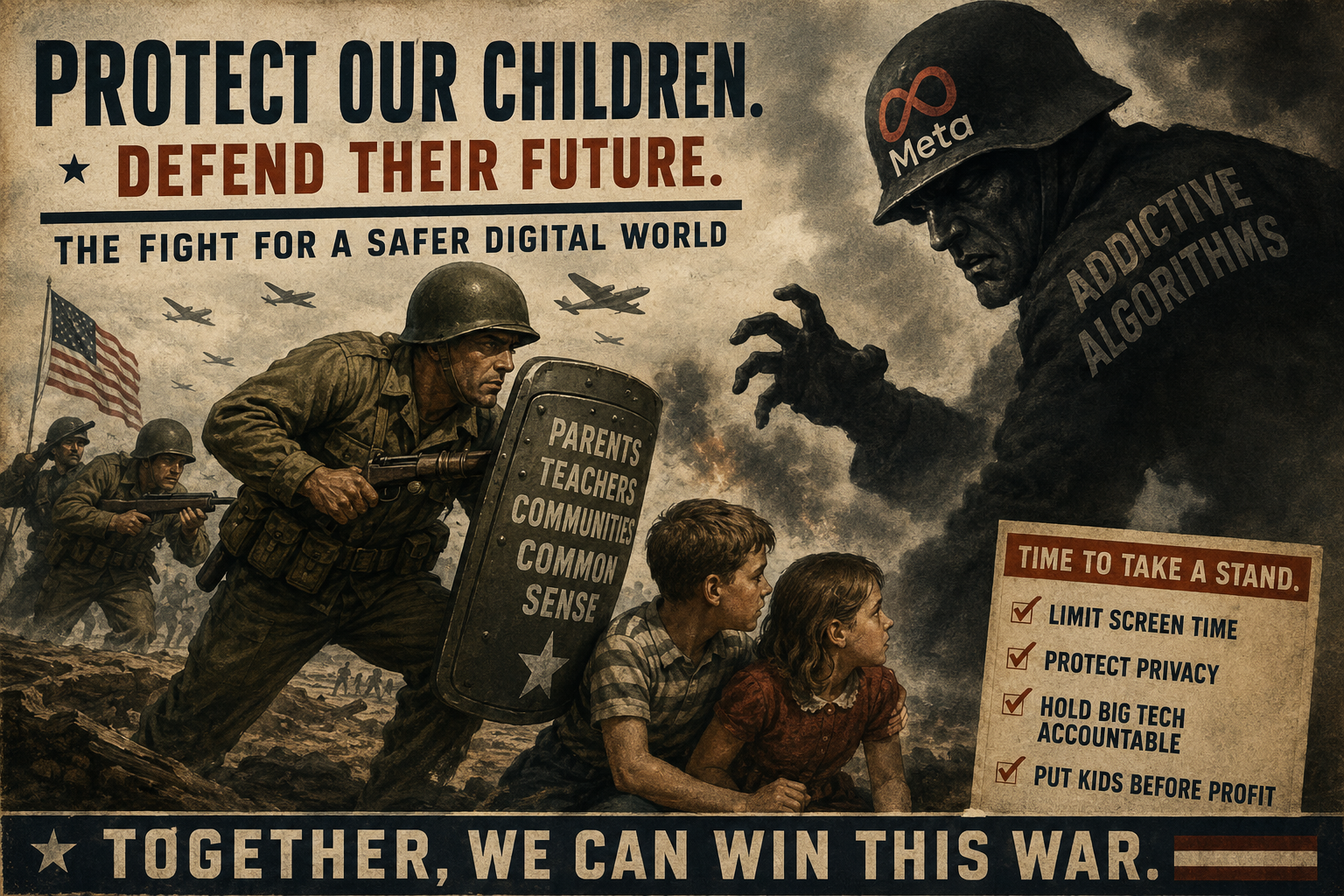
On August 26, Meta Platforms—the parent company of Facebook and Instagram—reached one of the largest consumer-protection settlements in American history after years of accusations that the company deliberately designed social-media products capable of keeping children and teenagers compulsively engaged while failing to adequately disclose what it knew about the potential consequences.
The settlement goes far beyond writing a check.
Instagram and Facebook are about to operate differently for Americans under 18. Meta must impose daily usage limits, restrict overnight access, reduce notifications during school hours, strengthen age verification, hide certain social-comparison features, improve parental controls, undergo independent auditing and take additional measures intended to prevent children from encountering harmful content.
The financial component is enormous as well. State officials describe the primary multistate agreement as worth as much as approximately $17.1 billion, while the combination of agreements announced around the same time has produced national headlines approaching $18 billion. Meta says payments will occur in annual installments over approximately a decade.
But the biggest question is not how much Meta is paying.
It is whether this settlement represents the beginning of a fundamental change in the relationship between social-media companies and America's children.
HOW THIS CASE BEGAN
The legal battle did not suddenly appear in 2026.
Its roots stretch back years.
Parents, researchers, child-safety advocates, former technology employees and eventually state governments increasingly questioned whether the same tools social-media companies used to maximize engagement among adults were appropriate for developing children.
Social-media companies make much of their money from attention.
The longer people remain on a platform, the more content they consume, the more information the platform gathers about their interests and behavior, and the greater the opportunity to display advertisements.
That makes engagement enormously valuable.
The states' theory was essentially that Meta understood this extraordinarily well—and deliberately engineered Instagram and Facebook to maximize that engagement even among children.
In October 2023, a bipartisan coalition of attorneys general filed lawsuits against Meta. Thirty-three states initially joined a major federal complaint, while additional states brought related actions in their own courts.
The allegations included violations of state consumer-protection laws as well as the federal Children's Online Privacy Protection Act, commonly known as COPPA.
The states claimed Meta had knowingly developed features that encouraged children and teenagers to use its products compulsively while publicly portraying Instagram and Facebook as considerably safer than internal company information supposedly suggested.
The lawsuit eventually became part of a much larger national legal confrontation involving not just Meta but the entire social-media industry.
WHAT EXACTLY WAS META ACCUSED OF DOING?
The accusations were broader than simply saying that "social media is bad for kids."
The states attacked the underlying architecture of the platforms.
According to the lawsuits, Meta deliberately incorporated psychological and technological mechanisms designed to encourage repeated engagement.
Among the features repeatedly scrutinized were algorithmic recommendations, infinite scrolling, autoplaying content, notifications, visible "likes," social comparison systems and other mechanisms that provide users with frequent small rewards while constantly presenting something else to view.
New York Attorney General Letitia James' office summarized the states' case by alleging that Meta designed algorithms to continually recommend content likely to keep children engaged and used features such as infinite scrolling and repeated notifications to make disengaging more difficult.
Think about the fundamental difference between older media and algorithmic social media.
A newspaper eventually ends.
A television program eventually reaches the credits.
A book has a final page.
An algorithmically generated social-media feed does not.
There is always another post.
Another video.
Another notification.
Another comment.
Another person who liked—or did not like—your photograph.
Another piece of content selected specifically because software predicts you may engage with it.
The states argued that for developing children, these features could produce something resembling a behavioral feedback loop.
And they alleged that Meta understood this danger.
THE INTERNAL RESEARCH PROBLEM
One of the most damaging parts of the broader controversy surrounding Meta has been the company's own internal research.
The issue exploded into public view in 2021 when former Facebook employee Frances Haugen disclosed thousands of pages of internal company documents.
Haugen subsequently testified before Congress.
Among the internal issues discussed was what Meta itself called "problematic use"—patterns in which young users reported difficulty controlling their Instagram use even when that use interfered with other parts of their lives.
During congressional testimony, Haugen discussed Meta research suggesting a percentage of 14-year-olds acknowledged that they could not control their Instagram use and that the behavior was interfering with their lives.
Other Meta research generated intense controversy over body image.
Meta later publicly argued that reporting about its research had been oversimplified. The company said its studies showed both positive and negative experiences among teenagers and maintained that Instagram could help some young users coping with loneliness, anxiety or other problems. Meta acknowledged, however, that body image was one area where some teenage girls who already struggled reported Instagram making those feelings worse.
That distinction matters.
Social media is not universally harmful to every child.
Research on social media and mental health remains complicated, and isolating social media as a direct cause of depression, anxiety, suicide or other problems is extraordinarily difficult. Children experiencing mental-health difficulties may use social media more frequently, meaning cause and effect can run in both directions.
Meta repeatedly used those scientific uncertainties in its defense.
The states, however, were making another argument.
They claimed Meta possessed information identifying potential dangers associated with its products yet continued prioritizing engagement and growth while downplaying those concerns publicly.
That transformed the case from a simple scientific dispute over whether social media causes depression into a consumer-protection dispute over what Meta knew, what it told the public and how it designed its products after learning about potential risks.
CHILDREN UNDER 13 CREATED ANOTHER MAJOR PROBLEM
Federal law creates special protections for younger children.
COPPA generally restricts companies from knowingly collecting personal information online from children under 13 without appropriate parental consent.
Meta's official minimum age for ordinary Instagram and Facebook accounts has long been 13.
The states argued that this was insufficient.
They accused Meta of knowing significant numbers of younger children were using its services while failing to adequately identify and remove them.
The 2026 federal trial included claims that Meta unlawfully collected personal data belonging to children and, according to Reuters, allegations that some child data was used for purposes including generative-AI training.
Former Meta engineer Arturo Béjar argued during the litigation that a company capable of building extraordinarily sophisticated systems for detecting fraudulent activity could have done considerably more to identify underage users.
Meta disputed the characterization of its practices and pointed to existing age-detection systems.
Under the new settlement, however, age assurance becomes substantially more important.
That will have consequences not just for children, but potentially for everyone using social media.
More on that shortly.
DID A COURT ACTUALLY FIND META GUILTY?
This requires an important correction to some of the language surrounding the settlement.
Meta was not found liable in the nationwide federal case that produced this settlement.
The trial had started.
Witnesses were testifying.
Evidence was being presented.
Instagram chief Adam Mosseri had taken the stand.
Meta CEO Mark Zuckerberg was expected to testify.
Then the parties settled.
Meta specifically denied wrongdoing.
Therefore, it would be inaccurate to say the $17 billion settlement itself proves that Meta deliberately addicted America's children.
A settlement resolves contested legal claims without necessarily deciding who would ultimately have won.
But that does not mean Meta entered negotiations without serious legal pressure.
Quite the opposite.
META HAD ALREADY LOST ELSEWHERE
Perhaps the most important development before the nationwide settlement occurred in New Mexico.
In March 2026, a New Mexico jury found Meta liable for violating the state's Unfair Practices Act.
The jury concluded that Meta had committed approximately 75,000 violations and imposed the statutory maximum of $5,000 per violation, producing a $375 million civil penalty.
Then the case became even more consequential.
In a second phase, a New Mexico court ruled that Meta's platforms constituted a public nuisance under the circumstances presented in that case and rejected Meta's attempt to rely on Section 230 of the Communications Decency Act as a complete shield against claims directed at the products Meta itself designed.
Additional remedies brought Meta's financial exposure in that case to approximately $942 million, along with court-supervised changes intended to protect children.
Another California jury also ruled against Meta in separate youth-harm litigation in March.
These were extremely important developments.
For years, social-media companies had powerful arguments available to them.
Section 230 generally protects internet platforms from being treated as the publisher of content posted by third parties.
The First Amendment provides another powerful defense when lawsuits involve speech.
But plaintiffs increasingly changed their legal strategy.
Instead of arguing:
"Instagram showed my child harmful content, therefore Instagram is liable for that content,"
they increasingly argued:
"Meta designed a product whose own mechanisms caused or contributed to the harm."
That difference may prove enormously important.
A company may enjoy substantial legal protection concerning what another person posts online.
It is considerably harder to argue that those protections automatically immunize the company's own product design.
THEN CAME THE AUGUST TRIAL
The largest test began August 18 in federal court in Oakland, California, before U.S. District Judge Yvonne Gonzalez Rogers.
California, Colorado, Kentucky and New Jersey were leading the presentation of the states' case.
The trial was expected to run six to eight weeks.
The stakes were extraordinary.
Depending on how violations were calculated, Meta potentially faced penalties running into the hundreds of billions of dollars.
The states were expected to argue that Meta essentially followed four steps: hook children, keep them engaged, collect their data and conceal or minimize the resulting risks.
Former employees testified.
Internal company discussions were introduced.
Meta defended its safety initiatives.
Instagram chief Adam Mosseri testified that the company had introduced tools intended to encourage young users to take breaks.
But testimony also highlighted a problem with some earlier safety tools: children frequently did not use them.
Before Meta made its "Take a Break" feature a default for teenage accounts, only a relatively small proportion of teens voluntarily activated it.
This exposed an important behavioral-design question:
Is giving a child the option to protect himself equivalent to designing the product to protect the child automatically?
The settlement strongly suggests state regulators believe the answer is no.
Many of the protections will now become defaults.
THE DEAL
After approximately a week of trial testimony, Meta and the states reached an agreement.
The federal judge approved the main settlement on August 26.
Nearly the entire country is covered.
The agreement involves 47 states plus the District of Columbia, Puerto Rico, American Samoa and the Northern Mariana Islands.
New Mexico is outside the agreement because it already pursued and won its separate case.
Florida declined to participate, arguing that the settlement was insufficient, and is continuing its own litigation.
Texas reached its own settlement with Meta worth more than $1 billion, requiring similar youth protections and directing money toward programs including youth mental-health services, crisis resources, digital literacy efforts, after-school programs and school grants.
HOW MUCH IS META REALLY PAYING?
This has produced confusing headlines.
Some reports say $17 billion.
Others say $17.1 billion.
Still others say approximately $18 billion.
The reason is that several agreements and different accounting categories are being discussed together.
State attorneys general generally describe the primary multistate youth settlement as requiring Meta to pay at least approximately $12.1 billion, potentially increasing to $17.1 billion depending on what competing social-media companies do.
Meta describes the broader payment framework as approximately $18 billion, with roughly 70 percent—or approximately $12.7 billion—allocated during the decade and another roughly 30 percent, approximately $5.3 billion, contingent upon TikTok and YouTube adopting comparable protections and financial commitments.
Texas simultaneously announced its separate billion-dollar-plus agreement.
Meta also agreed to resolve separate state privacy claims associated with the Cambridge Analytica scandal for approximately $459 million.
The simplest way to understand the headline is:
Meta has unquestionably committed billions of dollars, but the maximum headline number depends partly on future events involving its competitors.
WHERE DOES THE MONEY GO?
This is not primarily a class-action settlement where every Instagram user should expect a check in the mail.
The money generally goes to participating states and territories.
What happens after that varies.
Some states can deposit portions into general government accounts.
Others have specifically committed or earmarked money for programs addressing the problems underlying the lawsuit.
New York, for example, expects to receive at least approximately $819 million and potentially as much as $1.15 billion.
State officials say potential uses include mental-health services, programs addressing unhealthy social-media use, grants supporting phone-free classrooms, training for school mental-health professionals, after-school programs, summer programs and public-health initiatives.
California expects roughly $1.5 billion to $2.1 billion, with a significant portion intended for preventing or addressing mental-health and other harms associated with youth social-media use. Actual spending decisions will ultimately involve California's governor and legislature.
Colorado expects close to $615 million over nine years, which the attorney general says will support children's mental health and safety.
The exact destination of every dollar therefore depends on individual state law and budgeting.
That is important for taxpayers and parents to watch.
Winning billions of dollars sounds impressive.
Whether those billions actually improve children's lives will depend heavily upon what state governments eventually do with them.
META DOES NOT HAVE TO PAY EVERYTHING TOMORROW
The settlement is structured over approximately a decade.
Meta says payments will be distributed through annual installments over ten years.
That significantly changes the economic impact.
Meta earned more than $60 billion in net income during 2025.
So although this is an extraordinary settlement in absolute dollars, Meta does not suddenly have to remove $17 billion from a bank account.
The payments are spread out, and billions of the potential maximum are conditional.
From a business standpoint, therefore, this is painful but nowhere near existential.
Investors apparently reached the same conclusion.
Meta's shares actually rose during trading surrounding the settlement announcement.
That tells us something important.
Wall Street may have viewed the certainty created by settlement as preferable to the possibility of a catastrophic courtroom judgment and years of appeals.
WHAT INSTAGRAM AND FACEBOOK MUST NOW CHANGE
The operational changes are arguably more important than the money.
For American users under 18, Facebook and Instagram will become noticeably different products.
A Two-Hour Daily Limit
Meta must establish a combined daily limit of approximately two hours across Instagram and Facebook for minors.
Parents can authorize different settings.
The settlement also introduces what officials call "productive pauses."
After approximately 15 minutes of continuous use, Meta must interrupt prolonged scrolling.
Additional interventions occur around 60 and 90 minutes of cumulative use.
The idea is surprisingly simple.
The platform must periodically stop doing exactly what it was previously engineered to do extraordinarily well: keep the user continuously engaged.
INSTAGRAM WILL HAVE A BEDTIME
Under the agreement, minors will generally be blocked from accessing feeds between:
12:00 a.m. and 6:00 a.m.
Notifications will also be silenced overnight, generally between approximately:
10:00 p.m. and 7:00 a.m.
This could have one of the clearest immediate effects on families.
Parents have spent years attempting to impose bedtime rules while applications sitting inches from their children's pillows were simultaneously engineered to deliver alerts whenever something happened.
The settlement begins changing that dynamic.
The default product itself will assist the parent rather than constantly competing with the parent.
SCHOOL HOURS CHANGE TOO
During the school year, most push notifications to children will be disabled on weekdays between approximately:
8:00 a.m. and 3:00 p.m.
That may sound modest.
But consider the environment inside a classroom.
A teenager attempting to concentrate on mathematics may simultaneously have friends commenting on a photograph, a sports account posting a video, someone sending a direct message and an algorithm alerting the child to another recommended post.
Every alert creates an opportunity to shift attention.
The settlement attempts to reduce that constant interruption.
Parents and schools may ultimately find this among the most practical reforms in the agreement.
THE "LIKE" BUTTON WILL MATTER LESS
Visible like counts and reactions have long been criticized for turning social interaction into a public scoreboard.
Teenagers can watch, in numerical form, whether their photograph appears more or less popular than someone else's.
The settlement requires Meta to limit these social-comparison mechanisms for young users.
Like and reaction counts will generally be hidden by default for minors.
This may prove especially important for adolescents whose sense of social status and identity is still developing.
It will not eliminate comparison.
Teenagers compared themselves with one another long before Mark Zuckerberg was born.
But it may remove one mechanism that transformed comparison into a continuously updated numerical competition.
BEAUTY FILTERS ARE ALSO TARGETED
Certain cosmetic filters will be restricted for minors.
These include filters that significantly alter appearance, including features associated with cosmetic procedures or skin appearance.
That provision addresses growing concerns about children repeatedly viewing idealized or digitally altered versions of themselves.
When a teenager repeatedly sees a modified face displayed as the supposedly "better" version of herself or himself, the psychological effect can be difficult to measure.
But the settlement essentially takes the position that minors should not be routinely encouraged by the product itself to digitally reconstruct their appearance.
ALGORITHMS ARE NOT DISAPPEARING
This is one of the most important limitations in the settlement.
Meta does not have to eliminate personalized recommendation algorithms for children.
Teenagers will have the ability to choose a more chronological, non-algorithmic feed containing posts from accounts they follow.
Parents using Meta's supervision tools can also select that experience.
But the settlement does not completely prohibit algorithmic recommendations by default.
That has drawn criticism from child-safety advocates.
Former Meta safety engineer Arturo Béjar and others argue that harmful recommendations—not simply excessive time—are among the core dangers.
Their argument is that limiting a child to two hours does not solve the problem if those two hours still expose the child to highly optimized recommendation systems capable of directing vulnerable users toward disturbing material.
That debate is far from settled.
AGE VERIFICATION IS ABOUT TO BECOME MUCH MORE IMPORTANT
Perhaps the most consequential long-term requirement is age assurance.
All of the settlement's protections depend on Meta knowing whether a person is 12, 15 or 35.
Simply asking users to enter their birthday has obvious weaknesses.
Teenagers have been lying about their age on websites since websites started asking.
Meta will now be required to improve systems capable of estimating or verifying age using company technology and outside tools.
Independent audits will measure how effective those systems actually are.
There is a major tradeoff here.
Better age verification could dramatically improve child protection.
It can also create new privacy questions.
How do you prove your age online?
Government identification?
Facial age estimation?
Credit information?
Third-party verification?
Device-level information?
Artificial intelligence examining behavioral patterns?
Every method comes with different privacy risks.
The social-media industry may therefore be moving toward a strange paradox:
Protecting children's privacy could require adults and children to reveal more information about their identity or age.
That debate will become increasingly important over the next several years.
PARENTS GET MORE POWER
One of the settlement's central principles is that children should not be able to quietly disable major protections without parental involvement.
Parents will have increased control over limits and content settings.
A parent can potentially authorize additional time or adjust certain restrictions.
This changes the structure of digital parenting.
Previously, many parents essentially had to discover every dangerous feature, find every privacy menu, understand every algorithm and independently configure every protection.
The settlement increasingly places the burden on Meta to create safer defaults.
That is an important philosophical shift.
Instead of asking:
"Why didn't the parent turn the safety feature on?"
the new approach increasingly asks:
"Why wasn't the safety feature already on?"
META WILL BE WATCHED
Meta also agreed to independent auditing.
Outside reviewers will assess whether the company has actually implemented the required protections and whether its age-assurance systems function effectively.
The settling attorneys general will retain oversight.
This matters because a written policy is meaningless if it can be easily circumvented.
If a 14-year-old can enter a fake birthday and become a 25-year-old five seconds later, the two-hour limit accomplishes little.
Independent measurement therefore may become one of the most important parts of the agreement.
WHY TIKTOK, YOUTUBE AND SNAPCHAT SHOULD BE WATCHING CLOSELY
The settlement contains a fascinating provision designed to pressure Meta's competitors.
If other major platforms adopt comparable protections, Meta's rules become even stricter.
Under the second-stage framework, usage limits can fall to approximately 60 minutes per platform per day, nighttime restrictions can expand toward 10 p.m. to 7 a.m., and notification limitations become stronger.
The stricter framework could remain in effect for approximately ten years.
Meta also has billions of dollars in additional payments tied to competitors joining comparable agreements.
This creates unusual incentives.
Meta now has a financial and competitive reason to pressure TikTok and YouTube into operating under similar rules.
Meta has publicly called on those companies to follow its lead.
There is an obvious business logic.
If Instagram alone becomes harder for teenagers to use, some teenagers could simply move to TikTok, YouTube or Snapchat.
Meta would lose engagement while accomplishing little from a public-health standpoint.
If every large platform operates under the same restrictions, companies cannot compete by offering children increasingly addictive experiences.
In effect, the settlement attempts to create the beginnings of an industry standard.
THIS MAY BE SOCIAL MEDIA'S "BIG TOBACCO" MOMENT
Comparisons with tobacco litigation are imperfect, but they are understandable.
During the 1990s, state lawsuits against cigarette manufacturers did more than produce enormous financial settlements.
They exposed internal industry information.
They changed advertising practices.
They altered public perception.
And they established the idea that companies selling lawful products could nevertheless be held responsible for deceptive conduct and for deliberately engineering consumer dependency.
The Meta settlement is one of the largest state consumer-protection resolutions since the tobacco agreements.
That does not mean Instagram is equivalent to cigarettes.
It does mean the legal theory is beginning to look familiar:
A company develops an enormously profitable consumer product.
Evidence emerges that internal corporate knowledge about risk may be more concerning than public statements suggested.
Governments accuse the company of minimizing those risks.
Litigation follows.
Eventually the company agrees both to pay money and to change how the product is sold or designed.
That is why this case matters far beyond Meta.
WHAT DOES THIS MEAN FOR YOUR CHILD?
For families with teenagers, the changes should eventually become visible.
Your child may encounter an automatic time limit.
Instagram may stop working normally late at night.
Notifications may stop appearing during school.
Like counts may disappear.
Certain appearance filters may not function.
Content considered inappropriate for teenagers may become more restricted.
A teenager may be offered a chronological feed rather than being completely dependent on algorithmic recommendations.
And parents may receive significantly more ability to control the experience.
Those changes could produce arguments inside plenty of American homes.
A teenager who has spent five or six hours a day using social media may not appreciate a two-hour default.
But that friction is partly the point.
For years, parents were often fighting not only teenage behavior but also some of the most sophisticated engagement technology ever developed.
The settlement attempts to change the balance.
WHAT DOES THIS MEAN FOR ADULT USERS?
Most adults will not suddenly receive two-hour limits.
But adults could still feel the consequences.
Age verification may become more noticeable.
Platforms may ask for additional information when they cannot confidently determine someone's age.
Product design could increasingly separate adult and youth experiences.
Advertisers may have fewer opportunities to target minors.
Some features developed for children may eventually become optional wellness tools for adults.
And if regulators conclude the safeguards work, similar principles could spread across the technology industry.
The larger cultural impact may be even greater.
For years, technology companies largely decided what healthy product design meant.
Increasingly, courts, lawmakers, state attorneys general, parents and independent researchers are participating in that decision.
WHAT THE SETTLEMENT DOES NOT FIX
Parents should not interpret this settlement as a declaration that Instagram is now safe.
It isn't.
No social network can completely prevent bullying.
No algorithm can perfectly identify self-harm content.
No age-verification system will catch every child pretending to be an adult.
No time limit can replace parenting.
And no settlement can erase the enormous social pressure teenagers experience online.
There are also significant weaknesses.
Recommendation algorithms remain.
Many safeguards can still be altered with parental authorization.
Messaging functions receive different treatment from public feeds.
WhatsApp and Meta's emerging AI and virtual-reality products are not the central focus of the agreement.
And some important restrictions last only five or ten years.
Critics therefore argue that the agreement addresses symptoms without completely redesigning the underlying engagement business model.
That criticism deserves serious attention.
THE OTHER SIDE OF THE ARGUMENT
Meta has consistently disputed claims that its platforms created the youth mental-health crisis.
The company points out that adolescent mental health is affected by countless variables: family circumstances, economics, education, bullying, relationships, sleep, genetics, traumatic experiences and wider cultural conditions.
Meta also emphasizes that social media can help young people maintain friendships, discover communities, express creativity and find information or emotional support.
Those benefits are real.
A teenager isolated geographically may find friends online.
A military child moving between duty stations can maintain relationships.
A student with an unusual hobby can find thousands of others sharing that interest.
A young person experiencing a difficult situation may find support they cannot access locally.
The question has therefore never needed to be:
"Is social media good or bad?"
The better question is:
"Should companies be allowed to maximize engagement among children using the same techniques they use to maximize engagement among adults?"
This settlement moves the answer significantly toward no.
WHAT PARENTS SHOULD DO NOW
Parents should not wait for Meta to solve the problem.
The settlement provides tools.
Families still have to use them.
Parents should know which platforms their children use, understand whether accounts are correctly registered as teen accounts, activate parental supervision where appropriate and have direct conversations about online experiences.
Ask children what their feed looks like.
Not just how much time they spend online.
Ask what the algorithm recommends after they watch one video about weight loss.
Ask what appears after searching for depression.
Ask whether strangers can contact them.
Ask whether likes affect how they feel about themselves.
Ask whether their phone wakes them at night.
Ask whether social media improves their friendships—or makes them feel as though they are constantly being judged by them.
Technology controls are useful.
Trust and communication are better.
The Bigger Question: Who Should Decide?
The settlement also raises a deeper philosophical issue.
Who should ultimately decide what children see online?
There are several competing viewpoints.
The Case for Government Involvement
Supporters of stronger government oversight argue that children are uniquely vulnerable.
Young people cannot legally:
buy alcohol,
gamble,
purchase cigarettes,
sign many contracts,
vote.
Society already accepts limits in these areas because minors often lack the maturity to fully evaluate long-term risks.
Proponents contend that social media should be viewed similarly if companies knowingly design products that exploit developmental vulnerabilities. They argue that the government has a legitimate role in establishing minimum safety standards, just as it does for toys, automobiles, food, and pharmaceuticals.
The Case for Parents
Others believe the primary responsibility belongs with families.
Parents, not governments, know their children's personalities, maturity levels, values, and needs. From this perspective, broad government rules risk replacing parental judgment with bureaucratic decision-making.
Critics also worry that once the government gains authority to regulate how platforms present content to children, future expansions could reach beyond product design into decisions about what speech or viewpoints are accessible. While the current settlement focuses largely on platform features rather than political content, some civil-liberties advocates caution that any new regulatory framework should be carefully limited and transparent.
A Middle Ground
Many observers advocate a hybrid approach.
Under this model:
government sets minimum consumer safety standards,
companies build safer default products,
parents retain ultimate authority over how their children use those products.
This mirrors existing approaches in other industries. Government requires child-resistant medicine caps, car seats, and product testing—but parents still decide how those products are used.
WHAT HAPPENS NEXT?
Meta now has to implement the settlement.
States will receive payments over the coming years.
Independent auditors will examine compliance.
Parents will begin encountering new controls.
Teenagers will inevitably discover where the loopholes are.
Meta engineers will attempt to close them.
Researchers will study whether usage falls.
Mental-health researchers will investigate whether any measurable health improvements follow.
TikTok, YouTube and Snapchat will face increasing pressure to adopt similar restrictions.
State attorneys general will continue pursuing other social-media litigation.
Florida will continue its Meta case.
Meta still faces thousands of claims brought by individuals, families, school districts and other plaintiffs.
And governments around the world will be watching.
Australia has already pursued much more aggressive restrictions on children's social-media access.
European regulators continue imposing new obligations on technology platforms.
The Meta settlement gives those governments an important piece of evidence:
The technological safeguards social-media companies once portrayed as extraordinarily complicated are apparently possible.
Meta has now agreed to implement them.
That fact may prove almost as consequential as the money.
THE DISPATCH TAKEAWAY
The significance of the Meta settlement cannot be measured only by counting billions of dollars.
Meta can afford billions.
The real change is philosophical.
For much of the social-media era, the dominant business objective was simple:
Keep the user engaged.
The settlement introduces another requirement:
If the user is a child, engagement cannot be the only objective.
The difference matters.
A generation of parents has watched children grow up in an experiment humanity had never conducted before: nearly constant access to algorithmically personalized social environments capable of following a child everywhere—school, home, vacation, dinner table and bedroom.
We are only beginning to understand the consequences.
This week's settlement does not prove that every accusation against Meta was correct.
Meta did not admit wrongdoing in the nationwide settlement, and the largest federal case ended before a final verdict.
But other courts have found Meta liable in related cases. Internal documents raised serious questions. Former employees testified about shortcomings in youth-safety systems. State governments from across the political spectrum joined together. And rather than gamble on the outcome of one of the largest technology trials in history, Meta agreed to billions of dollars in payments and to redesign important portions of Instagram and Facebook for children.
That is not the end of America's debate over children and technology.
It may be the beginning of a new phase.
The next battle will concern TikTok.
YouTube.
Snapchat.
Artificial-intelligence companions.
Virtual reality.
Whatever technology comes after them.
And the central question will remain the same:
When extraordinarily powerful technology is placed in the hands of a child, who has the responsibility to make sure that technology was designed with the child's best interests in mind?
For years, the answer was largely left to parents.
After this settlement, Silicon Valley has been put on notice that the answer includes them too.
Sources and Further Reading
- Office of the Attorney General for the District of Columbia – Historic Meta Settlement Announcement
- New York Attorney General – $17.1 Billion Settlement and Youth Safety Reforms
- Meta Newsroom – Agreement with State Attorneys General Supporting Teens
- Reuters – Meta Reaches Multibillion-Dollar Settlement Over Children's Social Media Claims
- Reuters – Instagram Chief Adam Mosseri Testifies During Meta Trial
- Reuters – Whistleblower Says Settlement Does Not Go Far Enough
- Texas Attorney General – Texas Meta Settlement
- New Mexico Department of Justice – Landmark Verdict Against Meta
- New Mexico Department of Justice – Court Orders Meta to Pay $942 Million
- New Jersey Attorney General – Original Multi-State Lawsuit Against Meta
- U.S. Senate – Testimony of Facebook Whistleblower Frances Haugen
- Meta – Research on Teen Well-Being and Instagram
- Associated Press – Meta Settlement and New Youth Safety Requirements