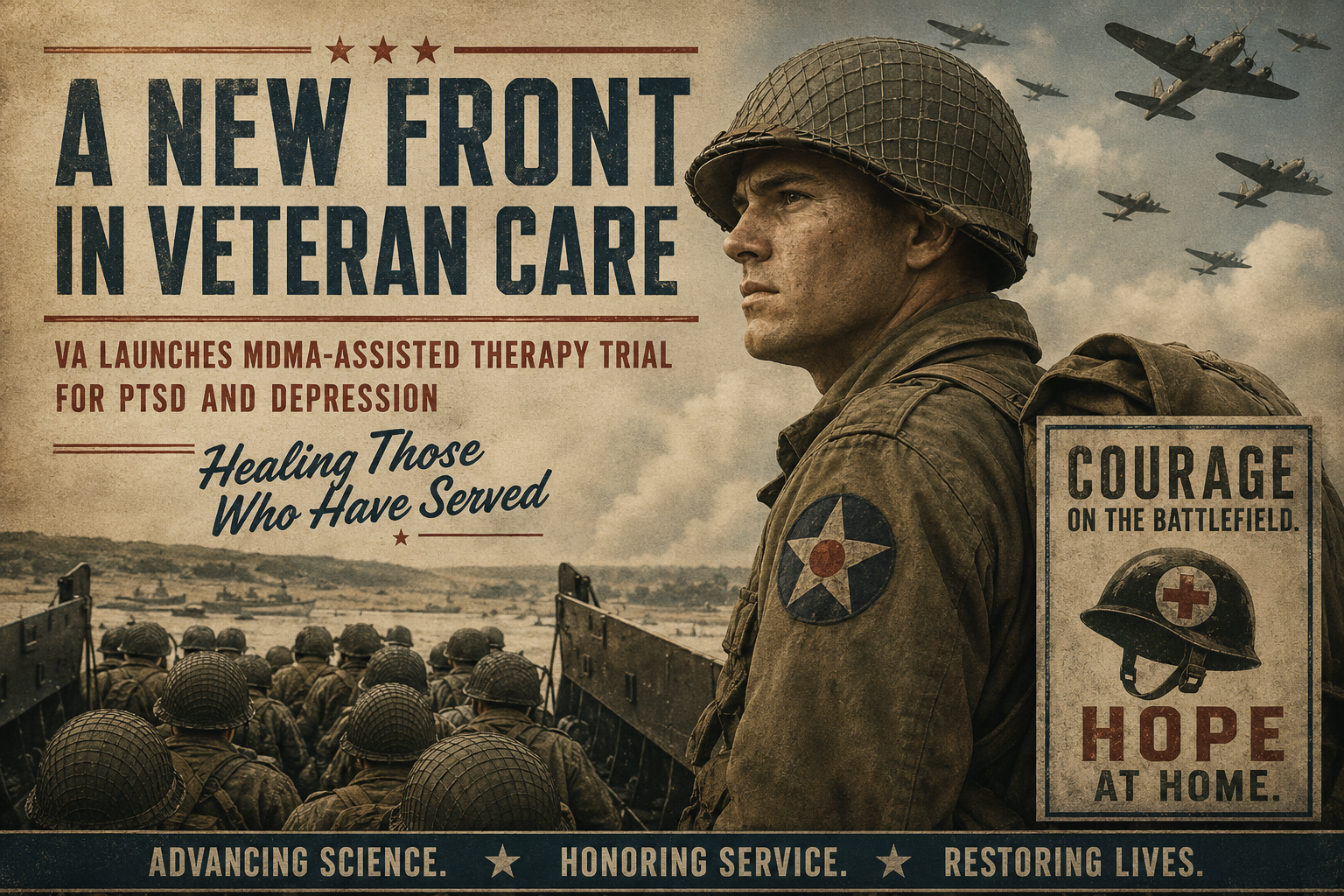
The Department of Veterans Affairs has opened a new front in the fight for veteran mental health. On May 26, 2026, the VA announced a clinical trial to evaluate the safety and effectiveness of MDMA-assisted therapy for severe mental health conditions, including post-traumatic stress disorder and alcohol use disorder. For a veteran community that has watched too many service members cycle through medications, therapy appointments, relapses, and crisis care without lasting relief, this announcement is significant.
The study is not a green light for recreational use, and it is not a shortcut around therapy. It is a controlled medical trial built around pharmaceutical-grade MDMA, trained clinicians, psychotherapy, safety monitoring, and outcome tracking. That distinction matters. The focus is not simply on the drug. The focus is on whether MDMA, when paired with structured therapy, can help veterans process trauma in a way that conventional treatments have not always achieved.
How MDMA Interacts with the Brain
MDMA, short for 3,4-methylenedioxymethamphetamine, affects several brain systems tied to mood, fear, social connection, and memory. In clinical research, MDMA has been shown to increase the release of serotonin and influence other chemical systems involved in emotional processing. Researchers also believe it may increase feelings of trust, empathy, and openness while reducing the fear response that can make trauma therapy feel unbearable for some patients.
For someone with PTSD, traumatic memories are not stored like ordinary memories. They can remain tied to survival responses: hypervigilance, panic, shame, anger, avoidance, and emotional shutdown. MDMA-assisted therapy is designed to create a temporary therapeutic window where a patient may be able to revisit traumatic experiences with less fear and more self-compassion. The goal is not to erase memory. The goal is to help the brain process the memory without keeping the veteran trapped in the same emergency response years after the danger has passed.
That is why trained therapists and integration sessions are central to this model. The medication may help open the door, but the therapy is what helps the patient walk through it, examine what is there, and carry the experience forward in a healthier way.
How the Research Became Legitimate
For years, MDMA research was held back by the stigma of the drug’s illegal recreational use. That began to change as scientists, clinicians, and advocacy organizations pushed for serious clinical studies. One of the most important groups in that effort has been the Multidisciplinary Association for Psychedelic Studies, better known as MAPS.
MAPS helped move MDMA-assisted therapy from the margins into modern clinical research. Its sponsored studies examined whether MDMA-assisted therapy could help people with severe PTSD, including people whose trauma histories were complicated by depression, childhood trauma, dissociation, and substance use. In a 2021 randomized, double-blind, placebo-controlled Phase 3 study published in Nature Medicine, participants receiving MDMA-assisted therapy showed significantly greater reductions in PTSD symptoms than those receiving therapy with placebo.
MAPS’ work also helped secure FDA Breakthrough Therapy designation for MDMA-assisted therapy for PTSD in 2017. That designation does not mean the treatment is approved. It means early clinical evidence suggested the therapy could represent a substantial improvement over existing options for a serious condition and deserved expedited development and review.
The path has not been smooth. In 2024, the FDA declined to approve Lykos Therapeutics’ MDMA-assisted therapy application and requested additional study data. That decision reinforced the need for stronger evidence, better safeguards, and careful trial design. But it did not end the conversation. In many ways, it sharpened the mission: if this treatment is going to become part of mainstream medicine, it has to clear the same scientific and ethical standards as any other serious therapy.
Why the VA Shift Matters
The VA’s decision to study MDMA-assisted therapy is important because of who the VA serves and what the VA represents. This is the largest integrated health care system in the country, responsible for caring for millions of veterans. When the VA investigates a therapy, it sends a signal that the question is no longer theoretical. It becomes part of the national conversation on veteran care, clinical standards, and the future of trauma treatment.
This shift also reflects a hard truth: traditional treatments do not work for everyone. Many veterans benefit from evidence-based therapies and medications. Others do not. Some struggle with side effects. Some drop out of therapy because confronting trauma feels impossible. Some develop substance use disorders while trying to quiet symptoms that never fully go away. For those veterans, the answer cannot be to simply repeat the same approach and hope for a different result.
The VA has already acknowledged this broader need. In December 2024, the department announced funding for a study of MDMA-assisted therapy for PTSD and alcohol use disorder among veterans, calling it the first VA-funded psychedelic-assisted therapy study since the 1960s. The new trial moves that promise into action.
How the Study Will Be Conducted
The VA trial is a randomized controlled study of MDMA-assisted therapy for veterans with PTSD and alcohol use disorder. According to the VA and the ClinicalTrials.gov listing, the study will enroll approximately 80 veterans and use a longitudinal design to compare outcomes between participants receiving MDMA-assisted therapy and a control group receiving therapy without MDMA.
The trial will be conducted through VA Providence Healthcare System and VA Connecticut Healthcare System. Researchers will examine whether MDMA-assisted therapy is safe and whether it improves PTSD symptoms, alcohol use outcomes, and overall functioning. Participants will be screened for eligibility, monitored throughout the process, and treated in a controlled clinical environment by trained professionals.
That structure is critical. The purpose of the trial is not to normalize unsupervised drug use. It is to determine whether a specific medicine, used in a specific dose, with a specific therapy model, under medical supervision, can help veterans who are carrying both trauma and alcohol-related struggles.
What Comes Next
The next step is evidence. Researchers will need to recruit eligible participants, run the trial, monitor safety, measure outcomes, and publish results that can be reviewed by the broader medical community. If the results are strong, the data could help inform future VA policy, additional studies, and possible regulatory conversations with the FDA.
Veterans should also understand what this announcement does and does not mean. MDMA-assisted therapy is not currently an approved VA treatment for PTSD. It is not something veterans can request as standard care tomorrow. This is a clinical trial, and access will depend on eligibility, study sites, screening, and research protocols.
Still, the meaning for the veteran community is real. The VA is acknowledging that the mental health fight requires more tools. It is recognizing that trauma, depression, addiction, and moral injury do not always respond to standard care. It is opening the door to alternative therapies not as fringe ideas, but as medical questions worthy of serious investigation.
For the veteran who has tried everything and still wakes up at war, this matters. For the family watching someone they love disappear behind PTSD and alcohol abuse, this matters. For the entire veteran community, it signals that the future of care may be broader, more honest, and more willing to challenge old assumptions.
The mission now is to follow the evidence, protect the veterans who participate, demand strong science, and keep pushing for treatments that restore lives instead of simply managing symptoms. The battlefield may change, but the obligation remains the same: leave no veteran behind.
Sources and Further Reading
- VA: VA launches MDMA-assisted mental health therapy trial
- VA: VA funds first study on psychedelic-assisted therapy for Veterans
- ClinicalTrials.gov: MDMA-Assisted Therapy for Veterans With PTSD and Alcohol Use Disorder
- Nature Medicine: MDMA-assisted therapy for severe PTSD
- MAPS: Phase 3 Trial Program for MDMA-Assisted Therapy for PTSD
- FDA: Complete Response Letter for MDMA-assisted therapy application