
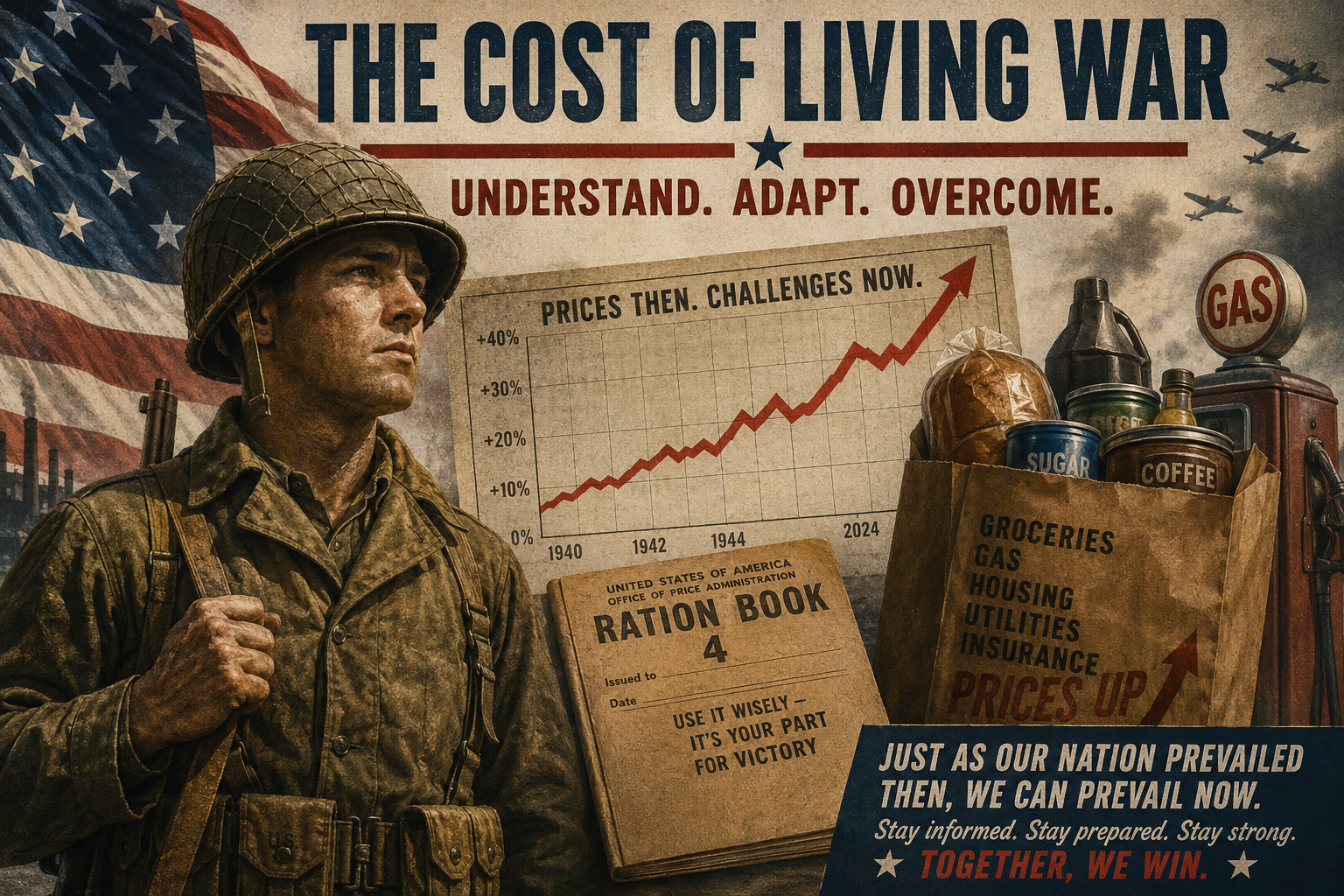
Inflation is often described in percentages, indexes, and central-bank language. But for everyday Americans, it shows up in much simpler places: the grocery aisle, the gas pump, the utility bill, the insurance renewal, the rent notice, and the mortgage quote that makes a starter home feel like an impossible objective.
The latest confirmed Consumer Price Index report from the U.S. Bureau of Labor Statistics shows that the Consumer Price Index for All Urban Consumers rose 0.5 percent in May 2026 on a seasonally adjusted basis. Over the previous 12 months, the all-items index rose 4.2 percent before seasonal adjustment. That was up from 3.8 percent in April, showing that the fight against inflation is not finished.
The headline number does not mean every family’s cost of living rose exactly 4.2 percent. It means the broad national basket measured by the government increased by that amount. A family with a long commute, a large grocery bill, high rent, or a recent insurance renewal may feel far more pressure than the national average suggests. A household with a fixed mortgage and lower transportation costs may feel less.
The Latest Inflation Report
May’s report showed several important pressure points. Energy rose 3.9 percent for the month and accounted for more than sixty percent of the monthly increase in the overall index. Gasoline rose 7.0 percent in May and was up 40.5 percent over the previous 12 months. Electricity rose 0.6 percent for the month and 5.9 percent over the year.
Food rose 0.2 percent in May. Food at home rose 0.1 percent, while food away from home rose 0.3 percent. Over the year, food increased 3.1 percent, with food at home up 2.7 percent and food away from home up 3.5 percent. That helps explain why families still feel the hit even when some grocery categories cool off month to month.
Core CPI, which removes food and energy, rose 0.2 percent in May and 2.9 percent over the year. Economists watch core inflation because food and energy can swing sharply due to weather, war, fuel markets, or supply shocks. Households, however, cannot remove food and energy from real life. Families still have to eat, heat their homes, cool their homes, and get to work.
Headline CPI
All items rose 4.2 percent over the 12 months ending May 2026.
Core CPI
All items less food and energy rose 2.9 percent over the same period.
Energy Shock
Energy rose 23.5 percent over the year, with gasoline up 40.5 percent.
Next Report
The June 2026 CPI release is scheduled for July 14, 2026, at 8:30 a.m. Eastern.
How the Inflation Index Is Calculated
The Consumer Price Index is designed to measure the average change over time in the prices paid by consumers for goods and services. The CPI-U, the most widely cited version, represents more than 90 percent of the U.S. population and reflects spending by residents of urban and metropolitan areas.
Each month, the Bureau of Labor Statistics collects prices from thousands of housing units and retail establishments across 75 urban areas. The sample includes supermarkets, hospitals, department stores, service businesses, rental units, fuel sellers, medical providers, and other outlets that represent day-to-day spending.
The CPI is not a simple average. Each category is weighted based on how important it is in the spending patterns of the population being measured. Shelter carries major weight because housing consumes a large share of household budgets. Food, energy, transportation, medical care, apparel, recreation, education, communication, and other services also feed into the index.
The index is then compared against earlier index levels. If the basket that cost $100 in the base period later costs $104.20, that reflects a 4.2 percent increase. The monthly report includes seasonally adjusted figures for short-term analysis and not seasonally adjusted figures for year-over-year comparisons.
What CPI Measures—and What It Misses
CPI is useful, but it is not a perfect picture of every family’s financial battle. It measures consumer prices, not every economic pressure facing a household. That distinction matters.
Home purchase prices are not directly included in CPI. The government treats owned homes as capital goods rather than consumer goods, so the index does not simply track the price of buying a house. Instead, shelter for homeowners is measured through Owners’ Equivalent Rent, an estimate of what homeowners would pay to rent the home they occupy.
Mortgage interest is also outside the CPI’s direct shelter measurement. That means a buyer facing high mortgage rates may experience a massive increase in monthly housing costs even if the CPI shelter number does not fully capture that shock. Property taxes, real estate fees, most maintenance, and home improvement costs are also generally outside the CPI consumption framework for owner-occupied housing.
Income taxes, Social Security taxes, and many other taxes not tied directly to the purchase of consumer goods and services are excluded. Investment assets such as stocks, bonds, real estate, and life insurance are also excluded because they relate to savings and investment rather than day-to-day consumption.
The CPI also reflects national averages. That can hide regional pressure. A family in a high-rent metro area, a rural household that drives long distances, or a homeowner in a state with fast-rising insurance premiums may face a much harsher reality than the national number suggests.
Where Americans Feel It First
Americans usually feel inflation most in repeated purchases. A television bought once every several years may matter less emotionally than milk, eggs, gasoline, and electricity. The pain comes from seeing the same basic needs cost more every week or every month.
Groceries remain one of the clearest pressure points. Even when the rate of inflation slows, that does not mean prices go back to where they were. It usually means prices are rising more slowly. A family that adjusted to higher prices last year may now be adjusting again to a new, higher baseline.
Gasoline and transportation costs are another direct hit. Fuel affects commuters immediately, but it also raises the cost of moving goods through the economy. Higher fuel costs can eventually work their way into delivery fees, airline fares, grocery prices, and business operating costs.
Housing remains the biggest long-term burden. Renters face lease renewals. First-time buyers face elevated home prices, high borrowing costs, insurance premiums, closing costs, and property taxes. Even homeowners with fixed mortgages are not immune when insurance, utilities, repairs, and local taxes move higher.
Insurance has become a quiet budget killer. Auto insurance, homeowners insurance, health insurance deductibles, and policy changes can hit households faster than wages can catch up. Even when a premium increase is technically captured somewhere in an index, the personal budget impact can feel much larger.
Why Prices Are Still Under Pressure
Today’s inflation pressures do not come from one source. Energy markets remain vulnerable to global conflict, supply disruptions, refinery issues, and commodity swings. Food prices can be affected by fuel, fertilizer, labor, drought, disease, shipping, and packaging. Housing inflation reflects years of underbuilding, zoning restrictions, high financing costs, and strong demand in certain markets.
Labor costs also matter. Higher wages can help workers survive inflation, but businesses may pass some of those costs into final prices. At the same time, if wages lag behind prices, families lose purchasing power. That is the squeeze many Americans understand without needing an economics degree.
The Federal Reserve is watching inflation expectations closely because expectations can become part of the problem. If consumers and businesses believe inflation will stay high, workers may demand higher wages and businesses may raise prices earlier or more aggressively. That can make inflation harder to break.
How Americans Can Fight Back
Families cannot control global energy markets or Federal Reserve decisions, but they can build defensive positions in their own budgets. The first step is knowing where the money is going. A written budget, even a simple one, can identify the leaks that inflation exploits.
Groceries are one battlefield. Meal planning, buying store brands, using freezer space, comparing unit prices, shopping discount grocers, and cutting food waste can reduce damage. Families should also consider community-supported agriculture, local food pantries, school meal programs, and Supplemental Nutrition Assistance Program resources when needed. There is no shame in using resources built for hard times.
Debt is another critical front. High-interest credit card balances become more dangerous when everyday costs rise. Paying down high-interest debt, avoiding new discretionary debt, and calling lenders before falling behind can prevent inflation from turning into a long-term financial casualty.
Insurance should be reviewed annually. Households can compare carriers, ask about bundling, adjust deductibles carefully, remove unnecessary coverage, and make sure they are not paying for outdated vehicles, old addresses, or duplicate policies. The goal is not to be underinsured. The goal is to stop overpaying through neglect.
Veterans should use every earned benefit available. VA disability compensation, pension programs, health care enrollment, state veterans benefits, property tax exemptions where available, employment services, housing assistance, and accredited Veterans Service Organizations can all help reduce pressure. Inflation is not the time to leave earned benefits sitting unused.
Resources for Families Under Pressure
Americans struggling with food costs can start with USDA nutrition assistance programs, local food banks, community action agencies, churches, and school district meal resources. Utility customers should ask about Low Income Home Energy Assistance Program support, budget billing, hardship programs, and weatherization assistance.
Renters facing hardship should contact local housing agencies, legal aid organizations, and state emergency rental assistance programs where available. Homeowners should contact mortgage servicers early if they are at risk of missing payments. Waiting until a crisis is fully developed usually reduces the number of options.
Veterans can contact the Department of Veterans Affairs, state departments of veterans affairs, county veterans service officers, the American Legion, VFW, DAV, AMVETS, and other accredited organizations for benefits help. The best move is to ask early, keep paperwork, and avoid predatory companies promising miracle outcomes for high fees.
What Government Can Do
The federal government’s most visible inflation tool is monetary policy through the Federal Reserve. Higher interest rates can cool demand, but they also raise borrowing costs for homes, vehicles, credit cards, and business expansion. That makes rate policy a blunt instrument: useful, but painful.
Congress and federal agencies can also attack the supply side. Expanding housing supply, improving energy reliability, strengthening supply chains, encouraging competition, reducing unnecessary barriers to construction, and investing in workforce development can help reduce long-term inflation pressure.
State and local governments have more power than many people realize. Zoning reform, faster permitting, infrastructure investment, property tax relief for vulnerable populations, utility assistance, targeted workforce training, and incentives for housing construction can all affect affordability. Local governments can also negotiate community benefits when large employers, data centers, manufacturers, or energy projects enter a region.
Poorly designed relief can backfire if it injects money into the economy without increasing supply. Better policy focuses on bottlenecks: housing shortages, energy constraints, health care costs, transportation costs, and lack of competition in critical markets.
Is Relief on the Horizon?
The forecast is mixed. Core inflation is much lower than the headline number, which suggests that some underlying price pressures are more contained than the overall report appears at first glance. But the surge in energy prices is a warning that inflation can return quickly when global events strike the supply lines.
The Federal Reserve’s latest debate reflects that uncertainty. Policymakers remain divided over the future path of inflation and interest rates. Some expect inflation to ease as temporary energy and tariff pressures fade. Others worry that inflation expectations, energy instability, AI-related infrastructure demand, and persistent service costs could keep pressure alive.
For households, the practical answer is to prepare for gradual relief rather than a sudden return to old prices. Inflation falling back toward target would mean prices rise more slowly. It would not mean the grocery bill, rent, insurance premium, or electric bill automatically returns to pre-surge levels.
The Bottom Line
The inflation fight is a readiness issue. Families that understand the numbers, know what the numbers miss, and take action early are better prepared than those waiting for Washington, Wall Street, or the next report to save them.
The latest CPI report confirms what many Americans already know from their own receipts: the cost-of-living war is not over. But Americans are not helpless. With disciplined budgeting, smarter shopping, debt control, benefit awareness, community resources, and better policy from state and federal leaders, households can hold the line until real relief arrives.
Sources and Further Reading
- U.S. Bureau of Labor Statistics: Consumer Price Index Summary, May 2026
- U.S. Bureau of Labor Statistics: Consumer Price Index Frequently Asked Questions
- U.S. Bureau of Labor Statistics: Measuring Price Change in the CPI — Rent and Owners’ Equivalent Rent
- Federal Reserve: Federal Open Market Committee Information
- USDA: Supplemental Nutrition Assistance Program
- HHS: Low Income Home Energy Assistance Program
- Department of Veterans Affairs: Benefits and Health Care Resources