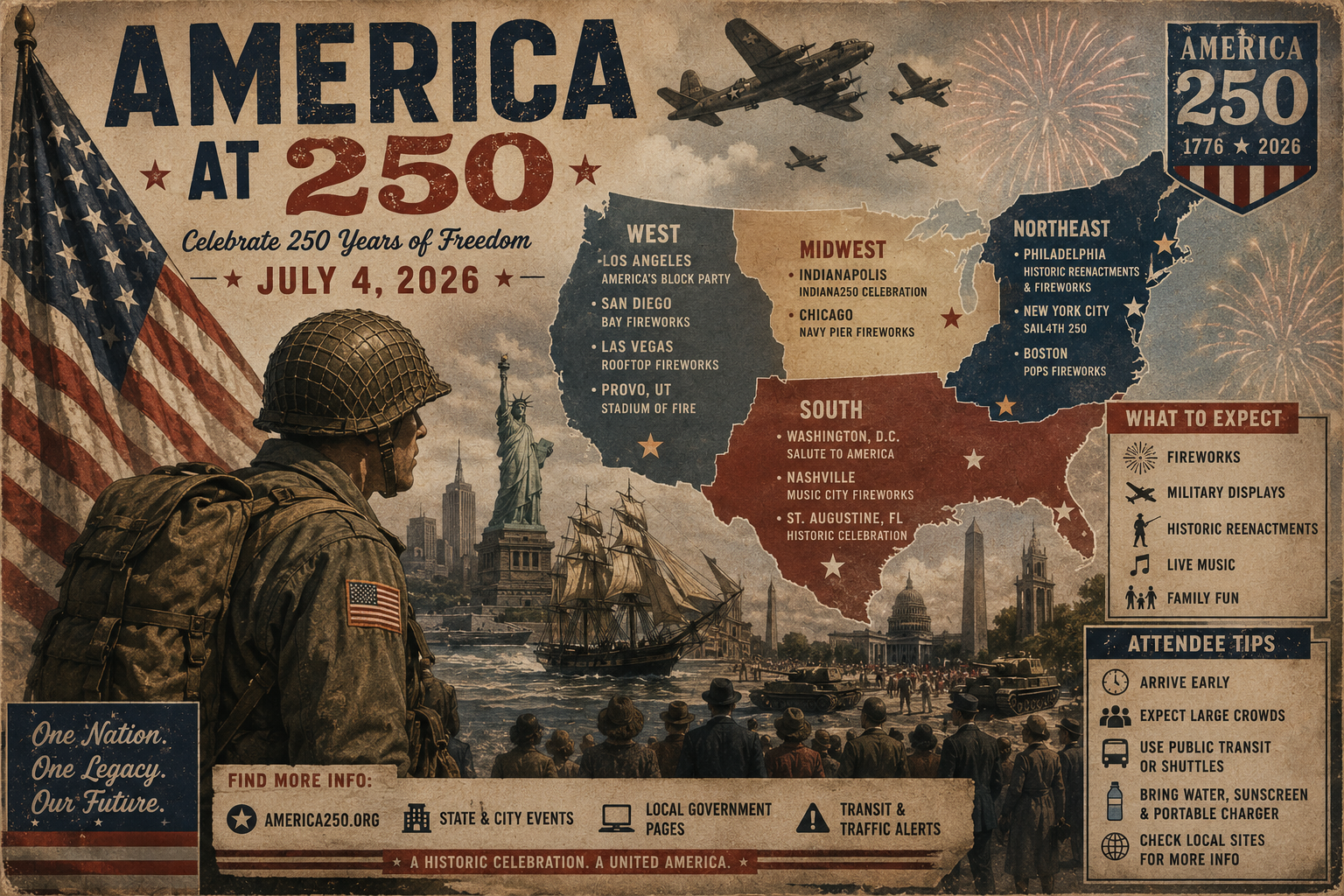
On July 4, 2026, the United States marks 250 years since the signing of the Declaration of Independence. The semiquincentennial is not just another holiday weekend. It is a national milestone, with major celebrations planned in historic cities, stadiums, harbors, downtown districts, and community parks across the country.
For veterans, military families, and patriotic Americans, this year’s celebrations carry extra weight. They are a chance to look back at the founding promise of the country, honor the generations who defended it, and gather with neighbors for the kind of civic moment that does not come around often.
Best For History
Philadelphia, Boston, St. Augustine, and New York Harbor will lean heavily into founding-era history, reenactments, landmarks, and maritime tradition.
Best For Spectacle
Washington, D.C., New York City, Nashville, Las Vegas, Los Angeles, and San Diego are expected to deliver some of the largest shows.
Plan For Crowds
Major downtown areas, waterfronts, and national landmarks will be packed. Arrive early, use transit, and expect security checks.
Where To Check
Use America250, state tourism offices, city event pages, transit agencies, and local police updates before heading out.
Northeast: The Founding Story Takes Center Stage
Philadelphia will be one of the symbolic centers of the anniversary. Wawa Welcome America and America250 programming will bring concerts, fireworks, historic sites, museums, and Independence Day events to the city where the Declaration was signed. Visitors should expect large crowds around Independence Mall, the Benjamin Franklin Parkway, and major transit hubs. SEPTA, city road closure notices, and official Welcome America updates should be checked before traveling.
New York Harbor will host Sail4th 250, a massive maritime celebration featuring tall ships, gray hull ships, harbor events, parades, concerts, and public viewing opportunities from July 3 through July 9. Expect extremely heavy waterfront crowds in New York and New Jersey, especially near the Statue of Liberty, Governors Island, lower Manhattan, Brooklyn, and Jersey City. Public transit and ferries will be the better option than trying to drive into waterfront areas.
Boston remains one of the premier Independence Day cities, with the Boston Pops Fireworks Spectacular on the Esplanade and Revolutionary War history throughout the city. The event is free and open to the public, but prime viewing areas fill early. Bring water, sun protection, and patience for long restroom and food lines.
South: The National Mall and Music City Go Big
Washington, D.C., will host one of the largest national celebrations, centered around the National Mall, the Washington Monument Grounds, the Independence Day parade, military demonstrations, patriotic performances, and a major fireworks show. The event is expected to involve heavy security, long screening lines, road closures, and limited parking. The best advice is simple: take Metro, travel light, and check the National Park Service, DC government, and Freedom 250 pages before leaving.
Nashville’s Let Freedom Sing! Music City July 4th celebration will bring major artists, local performers, and one of the largest fireworks-and-drone shows in the city’s history. Downtown Nashville will be crowded, loud, and energetic. Families should identify a meeting point, carry water, and use official parking or rideshare zones rather than trying to park close to the riverfront at the last minute.
St. Augustine offers a different kind of July 4 experience. As America’s oldest city, it is a strong choice for visitors who want waterfront fireworks, colonial history, walking tours, and a slower historical atmosphere. Parking in the historic district is limited, so visitors should plan for garages, shuttles, or walking from farther out.
Midwest: City Fireworks and Community Pride
Chicago’s Navy Pier and lakefront celebrations remain a major Midwest draw, with fireworks, family attractions, restaurants, and lakefront viewing. The biggest challenge will be movement: downtown traffic, full parking garages, packed trains, and crowded sidewalks. CTA updates and Navy Pier visitor guidance should be checked before arriving.
Indianapolis and communities across Indiana are tying July 4th events into the broader America250 moment, including county-level ceremonies, historic programming, concerts, fireworks, and veteran-friendly community gatherings. These events may be less overwhelming than the coastal mega-events, but visitors should still verify parking, chair rules, cooler policies, and restroom availability with local organizers.
Across the Midwest, many of the strongest celebrations will be local: courthouse lawn concerts, county fairs, parades, baseball games, veteran tributes, and fireworks at dusk. For families who want the anniversary spirit without big-city congestion, local America250 commission calendars may be the best place to start.
West: Stadium Shows, Bay Fireworks, and Desert Spectacle
Los Angeles will host America’s Block Party at the Los Angeles Memorial Coliseum, with national performers and America250 programming. This is a ticketed stadium event, so attendees should review bag rules, entry gates, rideshare zones, and Coliseum transportation guidance before arrival. The Expo Park area will be busy, and public transit is strongly recommended.
San Diego’s Big Bay Boom remains one of the West Coast’s signature July 4th events, with fireworks launched over the bay and viewing from multiple waterfront locations. The wide viewing area helps spread out crowds, but traffic after the show can be slow. Visitors should choose a viewing spot early, bring portable supplies, and expect limited restroom access away from major parks and venues.
Las Vegas will deliver the kind of spectacle only the Strip can provide. The 2026 Full Strip Spectacular is expected to launch synchronized fireworks from multiple resort rooftops, with red, white, and blue lighting and music broadcasts. The Strip will be extremely congested. Plan to walk, hydrate, avoid trying to move a vehicle during peak hours, and confirm resort access rules before entering casino properties.
Provo, Utah’s Stadium of Fire is another western landmark, known for patriotic performances, stadium production, and a major fireworks show. As with Los Angeles, stadium rules matter. Check ticketing, bag policies, parking passes, and entry times before arriving.
Tips Before You Go
The safest move for most major celebrations is to treat July 4th like a deployment plan: know the route, know the exit, know the weather, and know where your group will regroup if separated. Bring water, sunscreen, a portable charger, hearing protection for kids, and only the bags allowed by the venue.
Parking will be the biggest frustration in most large cities. Use public transit, official shuttles, satellite lots, ferries, or walking routes when possible. Ride-share prices may surge, pick-up zones may move, and some streets may close earlier than expected.
Amenities will vary widely. A stadium event may have food, bathrooms, medical staff, and controlled entry. A waterfront fireworks viewing spot may have limited bathrooms, long vendor lines, and no shade. Check official event pages for prohibited items, ADA access, cooling stations, water refill areas, and emergency procedures.
Final Word
America’s 250th birthday will be loud, crowded, patriotic, complicated, and memorable. That is fitting. The country itself has always been all of those things. Whether you stand under fireworks in Washington, watch tall ships pass the Statue of Liberty, listen to the Boston Pops, gather on a small-town parade route, or sit with family in a local park, the point is the same: show up, remember the inheritance, and think seriously about what comes next.
Sources and Further Reading
- America250: National semiquincentennial information and event calendar
- America250: Wawa Welcome America Concert & Fireworks
- Sail4th 250: New York and New Jersey tall ship celebration
- Freedom 250: Salute to America Celebration & Fireworks
- DC.gov: Salute to America security and visitor information
- National Park Service: Salute to America 250 event listing
- Boston Symphony Orchestra: Boston Pops Fireworks Spectacular
- America250: America’s Block Party at the LA Memorial Coliseum
- Visit Music City: Let Freedom Sing! Music City July 4th
- Visit Las Vegas: Summer Fireworks in Vegas